It's a popular fishing location apparently and certainly worth exploration botanically in the spring. I did note a Red Oak among the plantations of Larch nearby (leaves I know only too well from clearing my father's garden of them in Oxford).
Saturday, December 15, 2012
The Wye at Builth
Just west of Builth Wells the Wye passes through the rather picturesque Pen-ddol Rocks which my Geological Map suggests are glacial deposits (?) - but there are Dolerite formations nearby (in Radnorshire).
Friday, December 07, 2012
... and more...
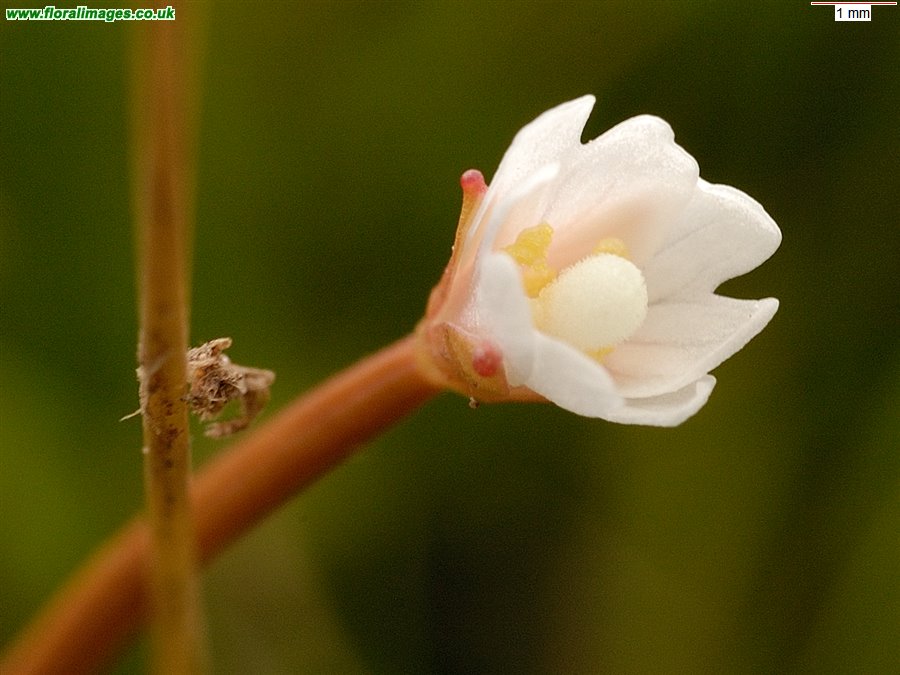
My first sighting of this little alien was on a "quick walk up Pen y Fan":
New Zealand Willowherb
Epilobium brunnescens
Probably spread by walkers' boots I suspect.
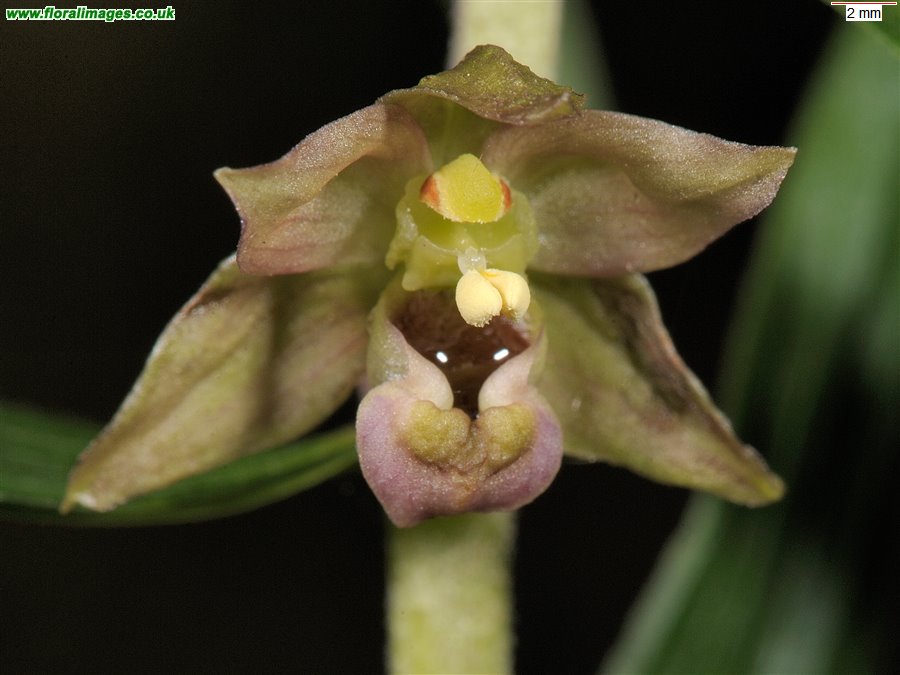
And this isn't that uncommon but a recording scramble at Craig y Rhiwarth this year provided the perfect opportunity for a photograph that shows all (?) the Orchid flower "bits".
Broad-leaved Helleborine
Epipactis helleborine
And the local speciality - visible from our window in theory - if you had a good enough telescope...
Meadow Saffron
or Naked ladies
Colchicum autumnale
Friday, November 30, 2012
Brecon gallery
In the absence of even being in Breconshire for most of the last week I am reduced to reporting a few highlights from my existing Breconshire gallery...
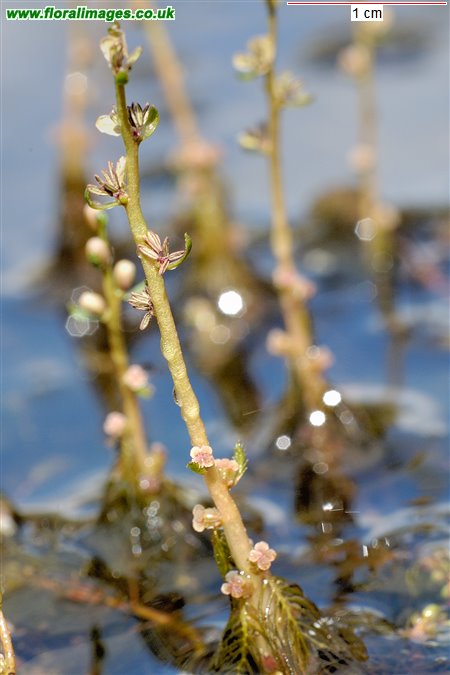
Two stars for me are my first ever sightings of the Myriophyllum genus. I found Myriophyllum alternifolium in a lovely clear stream up near the Brecon Beacons Visitor Centre:
Myriophyllum alterniflorum, Alternate Water-milfoil
Nearby was a plant that stumped me for quite a while - a Charophyte - one of the really quite vascular-plant-like ones:
Chara virgata, Delicate Stonewort
The other Myriophyllum was occupying a casual pool in a limestone quarry near the southern Breconshire border:
Myriophyllum spicatum, Spiked Water-milfoil
And, for something completely different...
Nectaroscordum siculum, Honey Garlic
A garden escape but well established and spreading on the old railway line path in Hay.
Saturday, November 24, 2012
Winter work
I nearly didn't obey the command from my e-diary to "blog". Haven't been out at botany at all.
But the MapMate patch for Stace 3 finally arrived and was accompanied by useful notes allowing me to double check that my upgrading to Stace 3 was accurate (as possible given my limitations...).
Mostly fine. FloralImages will rightly gain some "sens. lat." designations that most punters will ignore...
And Arenaria serpyllifolia is going to be a nightmare for me going forward (not a favourite family...)
I had trouble enough with the old subspecies - let alone allowing for the possible Arenaria leptoclados in future...
As always anyone who spots a mistake / infelicity on FloralImages and has the time to tell me (politely) will be richly rewarded with my undying gratitude and little else.
I've also back-checked the database for species marked as trees. Interesting that there are some you can set from the family and others you can't (eg rosaceae). So my tree gallery should soon be updated with more "Trees and Shrubs".
But the MapMate patch for Stace 3 finally arrived and was accompanied by useful notes allowing me to double check that my upgrading to Stace 3 was accurate (as possible given my limitations...).
Mostly fine. FloralImages will rightly gain some "sens. lat." designations that most punters will ignore...
And Arenaria serpyllifolia is going to be a nightmare for me going forward (not a favourite family...)
So this is now "sens' lat."
I had trouble enough with the old subspecies - let alone allowing for the possible Arenaria leptoclados in future...
As always anyone who spots a mistake / infelicity on FloralImages and has the time to tell me (politely) will be richly rewarded with my undying gratitude and little else.
I've also back-checked the database for species marked as trees. Interesting that there are some you can set from the family and others you can't (eg rosaceae). So my tree gallery should soon be updated with more "Trees and Shrubs".
Friday, October 26, 2012
Catch up
I finally got round to checking out the Conyza that is in profusion around a neighbour's home in the small cul-de-sac we live in in Hay. It turns out to be Conyza canadensis - I generally don't like the term "weed" but in this case it seems to only way to describe it !
Not so the Sand Spurrey I avoid weed-killing near our house. Both of these frequent pavement cracks and no doubt when Powys get round to it total extermination of all life forms will occur... (Our pavement also has flushes of Saxifraga tridactylites occasionally.) The Sand Spurrey seems unconcerned by trampling and is spreading.
Earlier in the week, Steph Coates (Brecon Wildlife Trust) contacted me about about a field near Talybont with abundant Stachys arvensis. It really is a great display for end of October in a field that is obviously resting from a brassica crop... Sad to think that turning the field to grazing like most around the area would see this gone... In fact I wonder if this sort of annual is more under threat than we realise. I only encountered it for the first time way off the beaten track at Foel y Mwnt last year. (A BSBI meeting naturally.)
Before that taking part in the Hay Walking festival turned up this magnificent Pollarded Oak. That was a friend's walk which I back-stopped. My own walk was pleased to find Naked Ladies still in bloom at Henallt Common !
Not so the Sand Spurrey I avoid weed-killing near our house. Both of these frequent pavement cracks and no doubt when Powys get round to it total extermination of all life forms will occur... (Our pavement also has flushes of Saxifraga tridactylites occasionally.) The Sand Spurrey seems unconcerned by trampling and is spreading.
Earlier in the week, Steph Coates (Brecon Wildlife Trust) contacted me about about a field near Talybont with abundant Stachys arvensis. It really is a great display for end of October in a field that is obviously resting from a brassica crop... Sad to think that turning the field to grazing like most around the area would see this gone... In fact I wonder if this sort of annual is more under threat than we realise. I only encountered it for the first time way off the beaten track at Foel y Mwnt last year. (A BSBI meeting naturally.)
Before that taking part in the Hay Walking festival turned up this magnificent Pollarded Oak. That was a friend's walk which I back-stopped. My own walk was pleased to find Naked Ladies still in bloom at Henallt Common !
Thursday, September 20, 2012
Back again
OK so it's been another long time...
I intend to visit all Brecon Wildlife Trust Reserves this autumn and started today.
Today I went to Glasbury Cutting - the nearest to where I now live and only 5 years plus to get there. The first thing that shocked me was the evidence of drought - confirming the "rain in summer is useless" argument. It was a very dry winter and the effects were apparent. Particularly in drooping and wilting Hart's-tongue (Asplenium scolopendrium) which I don't think I have ever seen before. Hard to believe there will be be Primroses, Cowslips and "Oxlips" at the far end in the spring - must go back and see. Tsk Tsk to BWT on the Oxlips which I presume will be the False Oxlip (Primula x polyantha)...
The reserve is managed for Dormice but I hope they manage to keep the spring flowers to enhance their environment.
It's also a fun reserve for old railway nuts as you are walking a surprisingly wide old cutting of the Hay / Brecon railway frequented by Kilvert.
Then I went up to Cae Eglwys high above Brecon with stunning views of the Fans and Black mountains. About the limit of my car's capabilities to get up the lane which is surprisingly rough as there is at least one house up there. No doubt they have a 4WD.
Many signs of richness for the spring and summer. Fleabane still flowering. and a nice little dammed stream to investigate. Spearwort was still looking good and I encountered white ones.Close up examination revealed that a yellow layer had been eroded / shed from the surface of the petals; revealing a white layer beneath that presumably accounts for the brightness of the flowers. The flower is still yellow from behind. See my pictures.
I intend to visit all Brecon Wildlife Trust Reserves this autumn and started today.
Today I went to Glasbury Cutting - the nearest to where I now live and only 5 years plus to get there. The first thing that shocked me was the evidence of drought - confirming the "rain in summer is useless" argument. It was a very dry winter and the effects were apparent. Particularly in drooping and wilting Hart's-tongue (Asplenium scolopendrium) which I don't think I have ever seen before. Hard to believe there will be be Primroses, Cowslips and "Oxlips" at the far end in the spring - must go back and see. Tsk Tsk to BWT on the Oxlips which I presume will be the False Oxlip (Primula x polyantha)...
The reserve is managed for Dormice but I hope they manage to keep the spring flowers to enhance their environment.
It's also a fun reserve for old railway nuts as you are walking a surprisingly wide old cutting of the Hay / Brecon railway frequented by Kilvert.
Then I went up to Cae Eglwys high above Brecon with stunning views of the Fans and Black mountains. About the limit of my car's capabilities to get up the lane which is surprisingly rough as there is at least one house up there. No doubt they have a 4WD.
Many signs of richness for the spring and summer. Fleabane still flowering. and a nice little dammed stream to investigate. Spearwort was still looking good and I encountered white ones.Close up examination revealed that a yellow layer had been eroded / shed from the surface of the petals; revealing a white layer beneath that presumably accounts for the brightness of the flowers. The flower is still yellow from behind. See my pictures.
Subscribe to:
Comments (Atom)