The hot weather had started when we went to waterfall country so thankfully we had some cover a lot of the time from trees and occasionally got near enough the waterfalls to feel their cooling effect. A good and varied list was obtained. Cow-wheat perhaps being a highlight in the woodland:
Common Cow-wheat,
Gliniogai
or
Melampyrum pratense
And we found this one Helleborine - unfortunately snapped off before flowering...
Broad-leaved Helleborine,
Y galdrist lydanddail
or
Epipactis helleborine
And the Sgwd Clun-gwyn waterfall had an out of reach display of, we thought,
Mimulus...
Our BSBI Field meeting (recording) was held on a very hot Saturday and a very good list was gathered by the experts for an area not recorded at all recently.
This included a fern I am yet to be adept at spotting. The field where we saw this had plenty though and I think I now have it for the future. This location was disappointing for richness but luckily the second site we had selected for the afternoon made up for that.
Narrow Buckler-fern,
Marchredynen gul
or
Dryopteris carthusiana
We even saw this county rarity on the way up to the farm we were targeting:
Sheep's-bit,
Clefryn
or
Jasione montana
And the next Tuesday saw us at a normally extremely wet location on the Epynt where the Cilieni river rises.
Conditions were perfect for this exploration with only minor squelchiness underfoot most of the way.
Examining Marsh fern - a Brecknock rarity.

Marsh Fern,
Rhedynen y gors
or
Thelypteris palustris
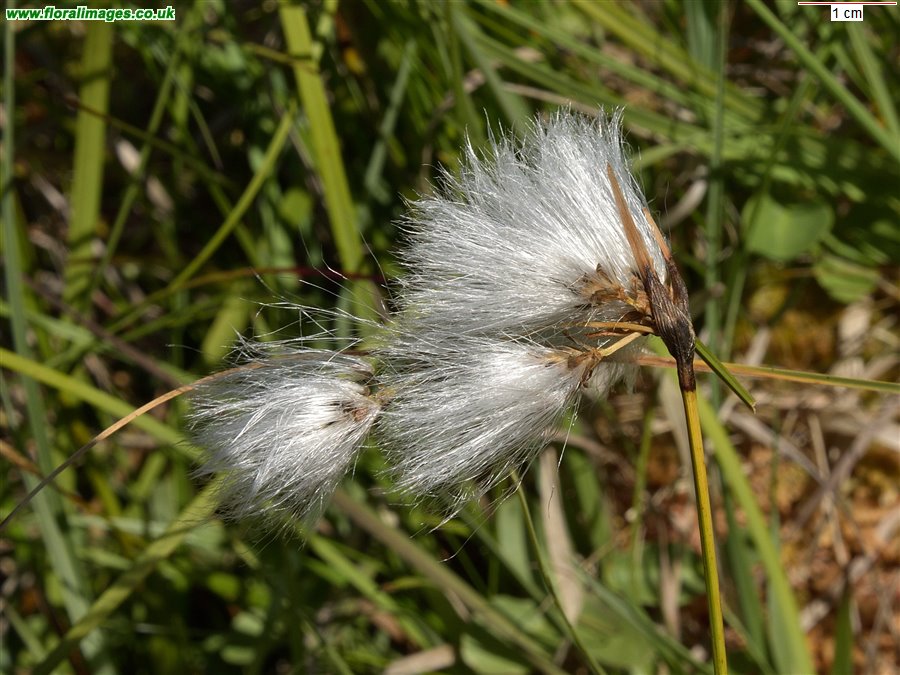
And we all agreed the more rare member of the, ubiquitous in Brecknock, Cotton-grass genus was the most well-groomed and classy one.
Broad-leaved Cottongrass,
Plu’r gweunydd llydanddail
or
Eriophorum latifolium
Then a few days later two of us explored a lane or two in an under recorded area near Llanwrtyd Wells, finding this on a Heart of Wales railway line bridge
Pale Toadflax,
Llin-y-llyffant gwelw
or
Linaria repens
We found a few surprising casuals to add to the list near this very deep ford on the river Irfon. The road is a public road but with warnings. There must be times when the ford is impassable to all but the biggest all-terrain vehicles.
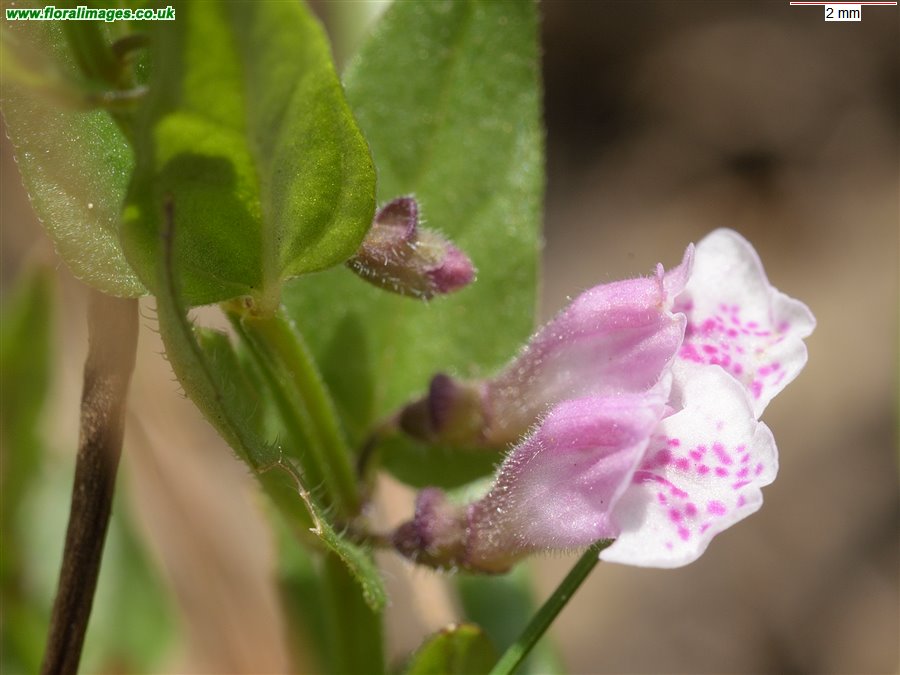
In the afternoon we explored a little of a high common nearby - which turned out to be incredibly dry with only a little dampness at the bottom of obviously normally wet gullies. But Skullcap was bravely completing its mission nonetheless.
Lesser Skullcap,
Cycyllog bach
or
Scutellaria minor
And it wasn't the ideal conditions for exploring an area of very early mining activity on the south of Llangattock Mountain for the next outing.
This is where the second lowest seam of the South Wales coalfield outcropped on the plateau and the scene of early coal extraction. The remaining cliff supported a lush community that obviously still had access to moisture unlike the spoil tips nearby. (Bilberry, Heather and not a lot else though.)
Botanising a dry industrial heritage landscape
But there were compensations such as:
Small Cudweed,
Edafeddog fach
or
Filago minima
And nearer the cars a big surprise - Bell Heather has not been seen in the area for a very long time. In fact there is an almost Brecknock-shaped hole in its distribution map.
Bell Heather,
Grug y mêl
or
Erica cinerea
Sue and Keith, not out with the botany group, managed another find that is a first for the 10km square where found:
Sand Spurrey,
Troellig arfor coch
or
Spergularia rubra
And, most recently, Steph and I spent a day with Ray Woods near where he lives with the excellent result that he was able to lead us straight to the richest areas and another very long list was obtained (again for an area not recently recorded). The definite highlight was a very large population of...
Ivy-leaved Bellflower,
Clychlys dail eiddew
or
Wahlenbergia hederacea
… and quite a lot of it was this pure white form:
Just visible in the Sphagnum - blue form again.
Just one of the many other choice plants we encountered.
Round-leaved Sundew,
Gwlithlys
or
Drosera rotundifolia
(Note that the top right leaf has a catch...)
(Collecting Callitriche brutia)
Thanks for these, Anne, (I think!)
Photographing Small Cudweed