Pages

Friday, May 02, 2014

Ignore the forecast

I do watch the weather forecast but Thursday was the only day I could manage and it didn't look too bad... So I was very pleased that three joined me for a spot of recording in Cwm Cadlan with the off-chance of confirming a record from 1983 of a rather unlikely (but not impossible) species of Mouse-ear. We didn't find it but intriguingly found habitat it wouldn't be out of place in and the two common relatives were there as expected. But best of all we had glorious weather - even sun and some great views, albeit after a dampish but bearable start.
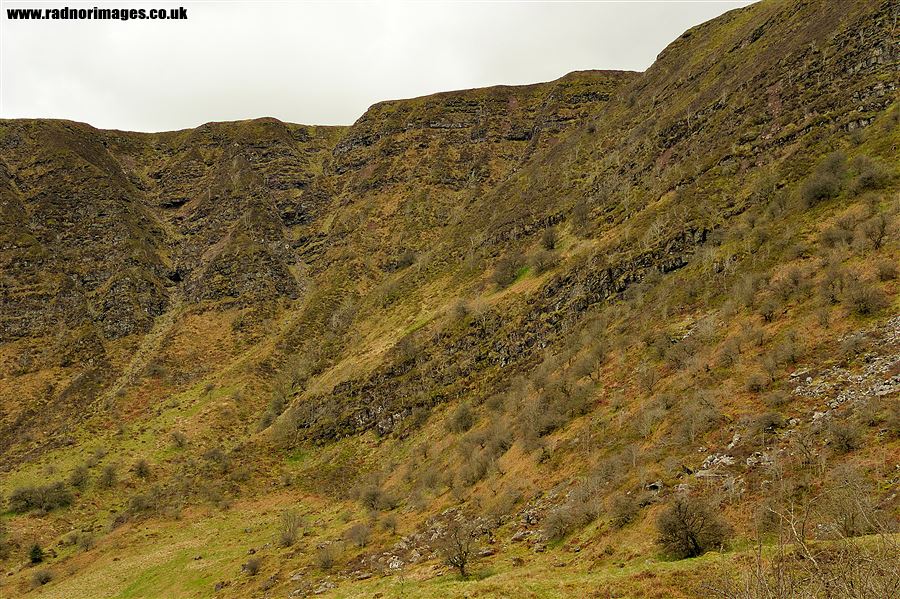
Eating our lunch with this view:

I was very glad Paul Green was with us - in the grazed turf there I would have taken twice as long to find half as much. As it is I learnt several species in minimal vegetative state under Paul's guidance. We even saw some dandelions which I was able to say half-literate things about.

Common Whitlowgrass, Llysiau’r-bystwn ar or Erophila verna - abundant in places
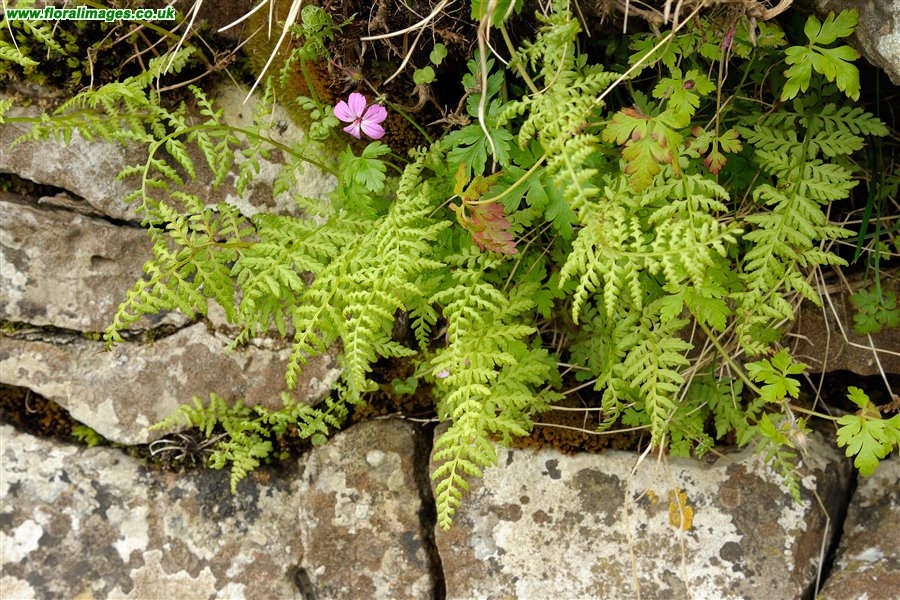
Brittle Bladder-fern, Ffiolredynen frau or Cystopteris fragilis in the rock crevices
Looking back as we returned.
 
Botanising along the rock ledges
An old lime kiln used by locals in the past ?


And finally - a preview of the Pwll y Wrach walk at the Talgarth festival on Sunday (when the weather is set fine). Many thanks to Dainis Ozols for the picture and especially for clearing our path for Sunday.

Tuesday, April 29, 2014

Mainly Dandelions

This is what a BSBI Taraxacum (Dandelion) workshop looks like:


There are well over two hundred species of dandelion in the UK and 130 or so have been recorded by Mike Porter, my colleague, or John Richards in Brecknockshire. John was the expert at the workshop I went to in Bangor over the weekend and is shown below explaining the characters of Taraxacum faeroense.


Three days of intensive taraxology haven't made me an expert but I will no longer be walking by every dandelion I see, muttering "Taraxacum agg." and moving on to more readily identifiable species - I hope.

I did learn a lot though and in a little excursion today was able to decide on a section (there are 9 broad sections for the genus) for the dandelions I saw at Henallt Common and even make a stab at a species for a few. But most were not suitable for taking home and pressing - an essential stage in identification for many. Maybe I will see some on Thursday... (The examples at Henallt were few and mostly too far advanced to be the ideal specimen.)

This was the highlight, Taraxacum palustre, Marsh Dandelion or Dant-y-llew’r gors at Newborough Dunes. It has been recorded in Brecknock, but not recently, and makes a good target to look out for as it is fairly easy to identify from the simple leaves and the habitat if favours (as well as other things).

 We saw other plants as well including this New Zealander at Aberffraw:
Cardamine corymbosa, New Zealand Bitter-cress or  Berwr chwerw Seland Newydd which was new to me and is apparently spreading through the country in pavement-type habitats. So to watch out for in Brecon and Hay etc.

And, of course, we saw some great scenery:

Friday, April 18, 2014

Dyrysiog Wood

A good recording day at this BWT reserve. We were disappointed not to find any Early Purple Orchids  (surely we were not TOO early ?) but everything else you might expect was there - with many species in satisfying abundances. There are also some great views of the Nant Bran ("Crow Stream") and sounds of many birds I couldn't identify - but Steph could.

It was the perfect time for Wood Anemones, Anemone nemorosa or Blodyn y gwynt and we particularly noticed that the patches showed a great variation in leaf and flower colour.

Caltha palustris Marsh-marigold Gold y gors

The Nant Bran with Steph finding stuff along the bank in the last picture

A fungus I haven't seen before...

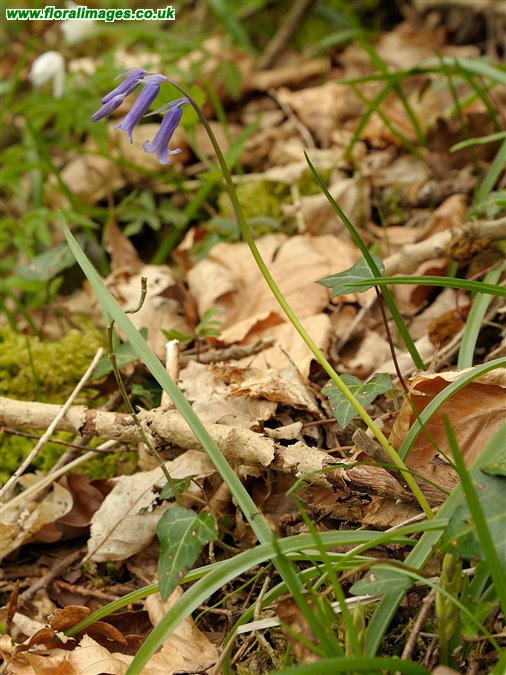
... and the Bluebells were just starting to flower:

Friday, April 11, 2014

Purple saxifrage

Four of us went in search of this at the prime Brecknockshire site yesterday. We all visited both locations featured here, all met each other; but we were never more than three. Hence this log from my iPhone:
(None of us miraculously flew across the reserve crags - the route updates every 10 minutes but I think that leg took a little longer so one or two got missed I assume. Two used the route round the south - a steep climb / descent - but they didn't have my phone with them.)

 JC and TV at the cairn on the way up (after seeing the saxifrage once). Photo by SM.

Anyway - the saxifrage.

This plant is a glaciation survivor that tends to keep to highish altitude and sheltered places where it flowers in the early spring before things get too hot. Here in Brecknockshire is its southern limit for the British Isles I believe. At Craig Cerrig-gleisiad we saw it from 500m up to 600 (pretty much as high as you can go there).

We started by looking at some rocks near the base of one of the many gullies that incise the cirque:

One plant was spotted by SM just at the far left of the rock formation in the middle which descends from right to left.
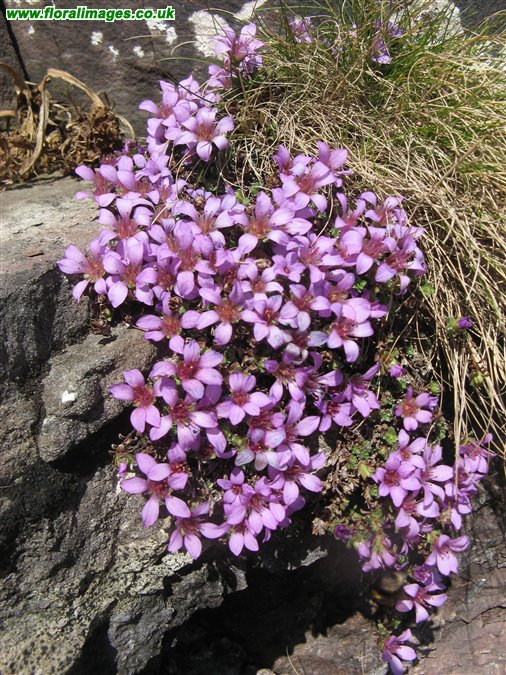
Saxifraga oppositifolia, Purple saxifrage or Tormaen porffor 
 and the site:

Despite his intrepid search along the formation no more was seen here (but could have been lurking high up) and he did encounter a good patch of Sedum forsterianum. (The less intrepid of the party took an easier route.)

Sedum forsterianum is known as Welsh Stonecrop (Briweg Gymreig) and is a delight in flower later in the year - this from Stanner Rocks in Radnorshire:


We climbed up to the top of the reserve to look down into the ravine near the lower site and managed to spot three more plants from up there. This is where SG joined us. I'll finish with a gallery of pictures...

Saxifraga oppositifolia, Purple saxifrage or Tormaen porffor at about 600m
The top of the gully with P S showing (just) on the rock on the right of the cleft.

SM went down the gully a bit and took this:

and in 2010 he took this picture:


Anemone nemorosa, Wood anemone or Blodyn y gwynt thinking the habitat resembles woodland.
Abundant Saxifraga hypnoides, Mossy Saxifrage or Tormaen llydandroed - will be a great sight later in the year.

Thursday, March 20, 2014

Another Butterbur and Beating the Weather

Petasites japonicus was recorded by Ray Woods back in 1995 near where the Irfon flows into the Wye at Builth but it now seems to be spreading down the river - even if it was originally a planted introduction.

Tony from the Botany Recording Group spotted some on the Brecknock Wildlife Trust Mammal Discovery Day at Caer Beris a few weeks back so I went along with him to see it flowering (and hence confirm the identification) on Monday. I walked into a patch, however, soon after leaving my car at Builth Bridge Car Park.


We found five sites in all from Caer Beris down to the car park - and I wonder if this newly naturalised species has spread further down the Wye.

Close up of Petasites japonicus, Giant Butterbur or Yr alan mwyaf

Like the native Butterbur I featured in the blog last year this plant sends up a flower spike before the true leaves but, as the picture above shows, this week's species has large leafy bracts below the inflorescence. 

Later in the year large leaves will appear which are similar to but distinguishable from the native Petasites hybridus. If you are walking along the Breconshire bank of the Wye in the next weeks do please look out for more of this. (Or for that matter the Radnorshire bank !)


Beating the Weather

Today, four of the group had sufficient faith in my interpretation of the Met Office predictions to accompany me to Park Wood near Talgarth and we got back to the cars just as the rain came in earnest at about 2.30 - entirely as planned. It was a good morning with even some sun and we made some good finds including several Early Dog Violets:
Viola reichenbachiana,   Early Dog-violet or Fioled y coed

We got as far as the old Bradwys Wood (included into Park Wood by the Woodland Trust who own both) and this was more damp and unkempt (in a good way) than the part near the car park with the path flanked by last-year's dead Angelica stems and Opposite-leaved Golden Saxifrage.

 A gully in Bradwys Wood with Opposite-leaved Golden Saxifrage

Possibly our best find (by Vicky) was Adoxa moschatellina, Townhall Clock, Moschatel or Mwsglys

We were either too early or the grid references were slightly off or maybe Herb Paris isn't there any more but we must look again - some year.


Friday, February 21, 2014

Working at Home

It's great that the weather has turned back to "normal" - even if that is sunny one moment and dark as twilight the next with random showers that just happen to break as you dash to the shops. So the indoor work continues: just with rather more of an eye at the window and the prospect of "going out botanising".

Steph and I did do a recce last week for a Mammal day in Hay next week. I learnt a lot about mammal tracks and also reminded myself that Hay Common would be a good area to record later in the year. (The mammal day is on the 26th - as I write there are still places; booking essential. See this link.)

Hawthorn, Draenen wen at Hay Common in 2008

Hay Common is near Hay on the path to Rook Wood and has a wide variety of mature trees - presumably with amenity use in the past - together with grazed common land packed with anthills and the interesting Login Brook flowing through it.

The home work has moved on from the Rare Plant Register to the master plan for target sites for BSBI Atlas recording in the next six years. The RPR isn't done but it is now in the form of a long printout to go through in the evenings and weed out the "may be rare but who cares" species (I mean unimportant aliens and subspecies that just aren't normally recorded and are therefore not actually rare etc.)

Looking for target monads to survey is interesting - it turns out that most hectads in Brecknockshire have a good number of records - even the more remote ones. But when the data is narrowed down to obvious recording sessions - many records on the same day in an area - then the holes in the data from the Atlas point of view are revealed and I am poring over GetAMap choosing target monads "sort of at random" but with an eye on accessibility. The order of hectads in my spreadsheet means I have started at the west of the county - a lot of longish walks have to be planned there - very few roads...

Friday, January 10, 2014

A good start to 2014

I think the eight of us that assembled for the botanical recording meeting yesterday were all greatly relieved to be able to get out in the sun for a walk. Any botany would be a bonus.

But thankfully there was plenty of Mistletoe at Cwrt y Gollen to atempt to determine host tree species for. (There were at least seven different host trees we were sure but some identifications are tentative for now: Populus sp.; Crataegus monogyna; Tilia x europea ; Acer platanoides; Sorbus spp.; Pyrus ?; Robinia ?) A place to visit again.

A Norway Maple at Cwrt y Gollen with Mistletoe

We tried to get behind the camp to woodland where we could see more trees with Mistletoe but were thwarted by too-deep flooding on the footpath that would have taken us there; so we continued up the A40 towards Crickhowell noting a probable Black Poplar by a farm entrance. Then we turned onto a footpath taking us to the Usk which clearly had burst its banks earlier in the winter judging from the debris "tideline" but was quite safe by yesterday. Surprisingly there was no mistletoe at all in the trees along the river but Paul Green spotted many species that none of the rest of us could identify at this time of year - including rare-for-Brecon Hemlock, Conium maculatum. Another place to revisit when plants are mature. So thanks to his expertise a good list was recorded for the area.

Sun !

Lime Tree with Mistletoe, Cwrt y Gollen


Friday, January 03, 2014

Mistletoe etc

New Year, New (botanical) resolutions. But most of them involve me, a computer and some database analysis. However there are things to get out and observe even now.

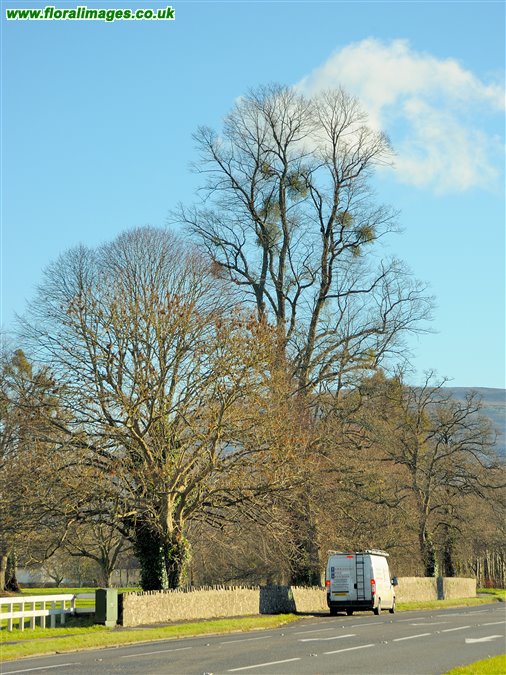
It's a good time to look for Mistletoe and there is plenty to see in the Brecknockshire area.

This is from Little Mountain, just in Herefordshire but near Hay

One parameter I have been remiss in recording up to now is the host tree for this plant. Stace lists Malus (Apple), Tilia (Lime), Crataegus (Hawthorn) and Populus (Poplar) as "common" hosts. But there are others. Oak was mentioned by Archie Miles, talking about his new book "The British Oak" at the Hay Winter Festival. He hasn't seen Mistletoe on Oak in the area for some time. Now there's a challenge... The Rev C A Johns in "Flowers of the Field" describes Mistletoe on Oak as "exceedingly rare".

Paul Green has spotted it on Ash on the road from Glasbury to Hay (at The Sheephouse) so I now also notice this every time I pass. There is also some on Hawthorn at the Warren in Hay. But my perception is that the common roadside occurrences are on Lime, Apple and Poplar. I'll see if anything can be done to extent the list of hosts for Brecknockshire this year.

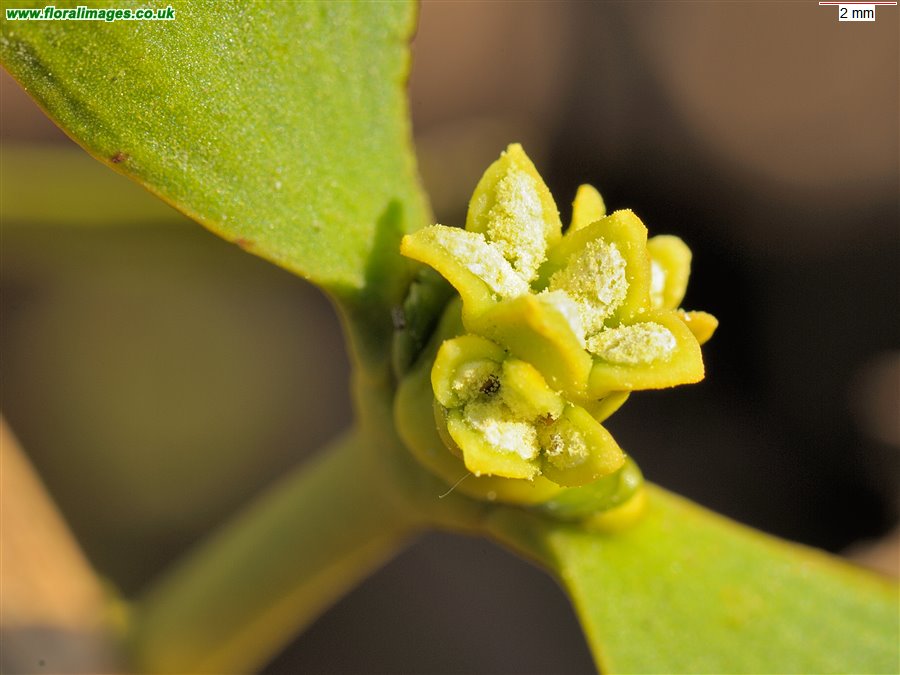
The flowers are not very significant...
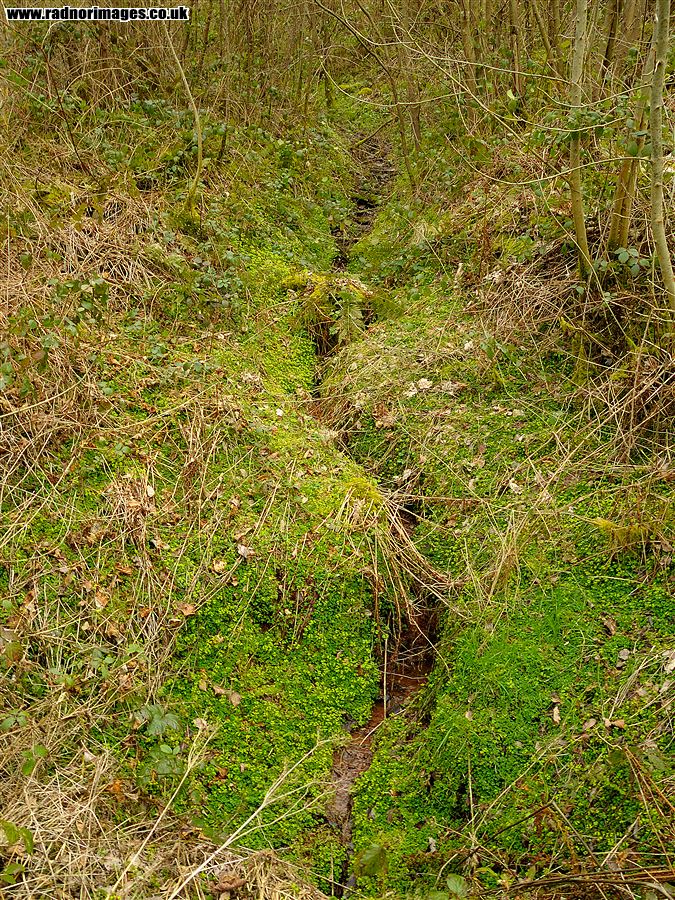

As my regular followers will maybe already know, I take my car to Builth for servicing and walk while it's being done. Yesterday was MOT time so I took a short walk along the Wye. The tree avenue along there is clearly worth a serious recording session - even if they are planted - as there is a great variety of species and some lovely mature specimens. A little later in the year I think this is a good prospect for a meeting. (It's a little early yet for my tree recognition skills - especially with the river so high and restricting access to look at twigs in many cases.)


Saturday, November 16, 2013

Ireland

I'm back and have had quite a wildlife week: but the indoors type. First there was the Brecknock Wildlife trust AGM with excellent presentations from all staff and then on Friday a full day discussing the next five years at the Trust's strategic planning meeting. Next year will be the BWT's 50th year so there will be many special event but put a note in your diary now for the 50th AGM next November - it really is well worth coming to hear what they have been up to and meet the staff and other members. The planning meeting was ably led by Phil Sutton, BWT CEO, and there was no option to sit at the back and not take part - excellent!

 As for botany here is a picture of Luma apicilata (Chilean Myrtle) which is well established between Bantry and Glengarriff on the roadsides:


- it probably came from the Ardnagashel estate nearby which has mature trees with this lovely bark:


I also photographed Purple Moor Grass for the first time for me in the wild - I thought it was looking quite nice ! (And there is a LOT of it in south-west Cork...)


But that was it for outdoor botany (apart from noting a few interesting plants I could identify in November). Some of these were beside this lovely lake:

I was walking on an old road way above the current coast road from Bantry to Glengarriff. There were splendid views including this of Sugarloaf on Beara, which my wife and I climbed a long time ago (when family and locals thought it a mad thing to do).

Another view this time from the Kerry side of the Caha range - I just liked the colours and for once the photograph just about worked.