Pages

Friday, March 29, 2013

Cornish Moneywort

28th March 2013
Paul Green was going to check the one Brecon Record for this (Sibthorpia europaea) so I joined him for the hunt. We both weren't expecting so much snow on the southern slopes of Mynydd Llangatwg near Brynmawr so at first the quest seemed doomed to fail.

But Paul's reputation for finding plants didn't let us down and he soon found a few leaves near the previously recorded site nestling under Juncus.


They were few and far between though here where a path crossed the Nant yr Hafod stream (although we had to admit there could be some under the quite large drifts of snow). 

Paul at about the third population found. 

We decided to follow the stream back down to the cars to see whether the plant had spread along it and this led us to areas of quite great abundance. 


Both of us were puzzled why this plant should occur in Breconshire on only this stream, in fact we were talking about this as we laboriously climbed over close parallel fences that the map showed crossing the moorland in an unusual way for common land fences. Paul had also told me earlier he met a man asking the way to the gasworks...

It turns out the fences mark the path of a gas pipeline and I passed the gasworks later returning round the mountain on the old tramway (now a road !) which is at the end of the pipeline. Could it be that pipeline worker's feet / tyres explain the Sibthorpia in this location ? 

Or is this an under-recorded plant for Brecon that also grows along similar streams ? (Or is the geology underylying this stream special ?)

By the end of the population - not far from the cars - I was spotting Sibthorpia like a pro...

Update after better "research" 1st April 20132

It can't be the gas pipeline that is responsible for Sibthorpia getting here - this was constructed between 2001 and 2004 (thanks Google Earth archive imagery !). The original record at this site was in 2000 . However there was a reservoir on the upper waters of the Nant yr Hafod constructed in the 1970s and now empty that might account for the plant being translocated by workers / their vehicles and of course there has been much construction work (tramroads etc) on the mountain since Victorian times.

Saturday, March 23, 2013

First proper meeting

But what a day ! Thanks to Vicky for joining me to look at the daffodils in Llandefaelog Wood and explore for other things we could jointly identify.

The daffodils would seem to be N. pseudonarcissus but maybe not as "pure" as those I posted last week. (Slightly flared / lobed corona on at least one of the few that were open enough to check.)

But writing down finds was becoming difficult by the time we departed (note to self - always take those fingerless mittens I bought in Bantry square a month ago). It was interesting to see so many regenerating conifers (Douglas Fir and ? obscure Abies) that must have come from parents outside the reserve. There was also a tall Larch with what we saw as largish cones very high up in our binoculars - so further investigation needed on that - maybe BWT know what it is.

I went to the "Captain's Walk" in Brecon next to look at a site where we (BWT volunteers) saw Butterbur leaves last year and lo and behold the flowers were just emerging:

Petasites hybridus, Brecon

It looks like my postponed plan for next Thursday at Abergwesyn might have to be put off again - the current long-range prediction is for 2 degrees during the day and -7 at night for that area - in other words an average below freezing !

Yesterday, on a historical heritage walk (tramways) I spotted a nice Helleborus foetidus (probably a garden escape in all honesty) in Glasbury. On the Brecon side of the Wye BUT VC 43 - Radnor - the old boundaries - aren't they wonderful ?

Helleborus foetidus, Glasbury

(Brecon hasn't had this recorded according to the current VC catalogue.)


Friday, March 15, 2013

Spring ?

Soon I think. In fact I felt a bit of a wimp for postponing the Abergwesyn foray planned for Thursday as I took up a long-standing offer of an introduction to Llangorse from an expert and we had a great day. It was still too early for much recording although plenty of signs of life and "places that looked potentially interesting.

 Selwyn, who took me, was a great guide and I now have met many of the landowners and know some good places to hunt for botanical interest. I did remove a layer in the midday sun but, as I had actually put on one more layer than I ever normally do I suppose I was right that Abergwesyn would have been pretty miserable... At the DoE hatchery I was shown some "probably wild" daffodils and they were - Narcissus pseudonarcissus I am sure (having checked with the very large Stace 3 key).


This hatchery is a little way away from the lake and is where Selwyn bred his voles. We saw plenty of signs of these around the lake though and I learnt that a Water Vole will always chop its reed stems (food storage) with a 45 degree cut...

A few days before that I spent some time at Betws-y-Coed on a BSBI Conifer identification course that really was excellent (And the explanation for some new confier pictures on the site.) I really feel I can cope with these now and actually a drive around the roads around Llangorse will yield some conifer records I notice.

Cones at the top of a Monkey Puzzle - a stretch for the lens I had with me but just visible

A new record for the old arboretum we were in - Araucaria araucana is regenerating there (Paul Green spotted it).

Friday, February 15, 2013

Another Reserve

My attempt to visit all Breconshire Reserves has been on hold but I went to Llandefaelog Wood yesterday. As with many of the reserves I have visited in autumn / sinter this was immediately one I put on my "must visit later in the year" list. (Quite soon judging from the Daffodils' state of growth.) The daffodils are billed as native so I will have a go at them before I consult the older records !

I'm always a sucker for Hazel "blossom" so took out the macro equipment for this:


Corylus avellana female flower

I spent most of my time though trying out my "trees in winter" skills after the excellent course in Shrewsbury a couple of weeks back. It certainly helped.


Friday, February 08, 2013

An Easy Flora

Not much to blog about this week (or last) although my trawl through the historical records for Breconshire continues. But my "grate frend*" John Clark had been travelling again and managed to photograph the entire vascular plant flora for a continent:
Colobanthus quitensis and Deschampsia antarctica on the Antarctic Peninsula 13th January 3013

See more pictures of them at the FloralImages recent additions page.

Apt that one is a monocot and the other an (eu-)dicot...

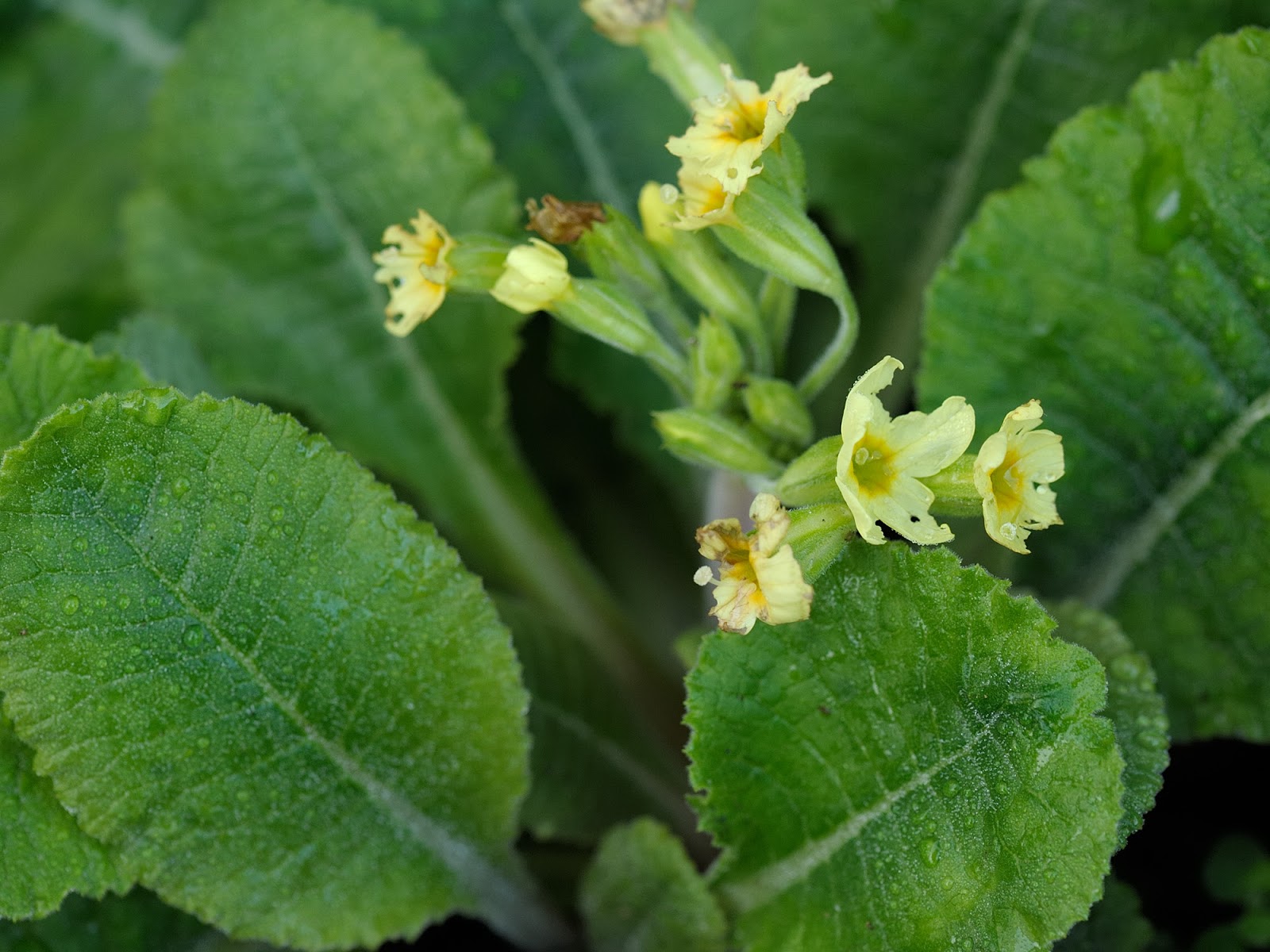
(And also I have some good guest images of Primula Elatior now - thanks to Ken Southall. See Primula Elatior at FloralImages.)

* Readers of Molesworth books will understand. Not sure which of us was Peason.

Friday, January 11, 2013

New Year, New Role

I've always felt my new role as joint recorder for Breconshire would become more "real" in the New Year (although I have been doing a lot of preparation and some recording in the late autumn / winter of 2012). Even the weather seems to be more promising - although ice is forecast for the weekend. (That will teach the various spring plants in my garden a thing or two - many are being very precocious including some just-emerging Oxlip flowers on one of the plants I grew last year.)
Primula elatior, my garden, from seed, struggling this early ...
This week Paul Green (Welsh Officer standing in for Polly) called to reassure me on the role (at least that is how it seemed to me). I had known of Paul and even got help from him and his brother over the web for a long time but we only met for the first time a few months ago. Of course his (and others') Flora of Somerset was a huge help to me starting out late in life to be some sort of botanist based in Weston-super-Mare.
We went up to Henallt Common to see the Blysmus compressus site (only site in Wales ???) and there were discernible last year specimens to see. But we were both delighted to find, visiting the main Circaea x intermedia site (no sign at all as expected) that there was a Colchicum autumnale plant still flowering on the slope. Rather pitiful in the conditions but full marks for sustained effort.
Colchicum autumnale flowering in January at Henallt
This common above Hay is an abundant Colchicum site and it was good to see the evidence of serious Bracken control (thanks CCW) on an open grass slope that I am sure can be seen from our upstairs windows here in Hay. I am hoping one to day to see this pink with Colchicum flowers (not swamped by Bracken) from here.
Paul noted the "flora of De Breos Court" - where we live in Hay. The small paving stones make a good site for one or two interesting plants including a garden escape I was struggling to identify and he was able to name as Malling Toadflax, Chaenorhinum origanifolium. To my shame I later realised that David Fenwick had shown me this near Plymouth a while back.
Malling Toadflax, Chaenorhinum origanifolium
Blysmus compressus at Henallt - in the summer

Saturday, December 15, 2012

The Wye at Builth

Just west of Builth Wells the Wye passes through the rather picturesque Pen-ddol Rocks which my Geological Map suggests are glacial deposits (?) - but there are Dolerite formations nearby (in Radnorshire).


It's a popular fishing location apparently and certainly worth exploration botanically in the spring. I did note a Red Oak among the plantations of Larch nearby (leaves I know only too well from clearing my father's garden of them in Oxford).

Friday, December 07, 2012

... and more...

My first sighting of this little alien was on a "quick walk up Pen y Fan":
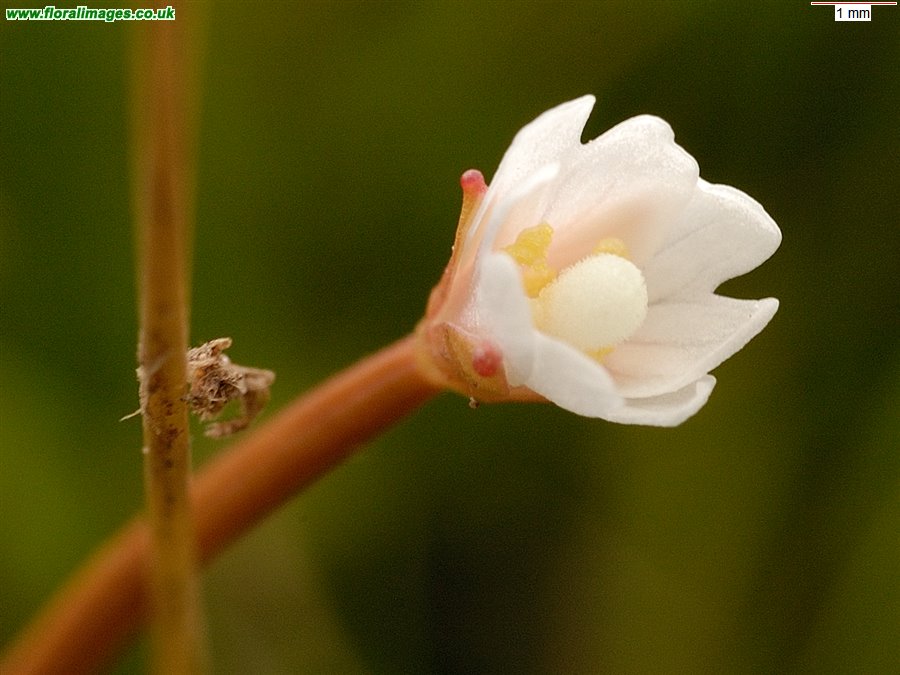
New Zealand Willowherb
Epilobium brunnescens
Probably spread by walkers' boots I suspect.

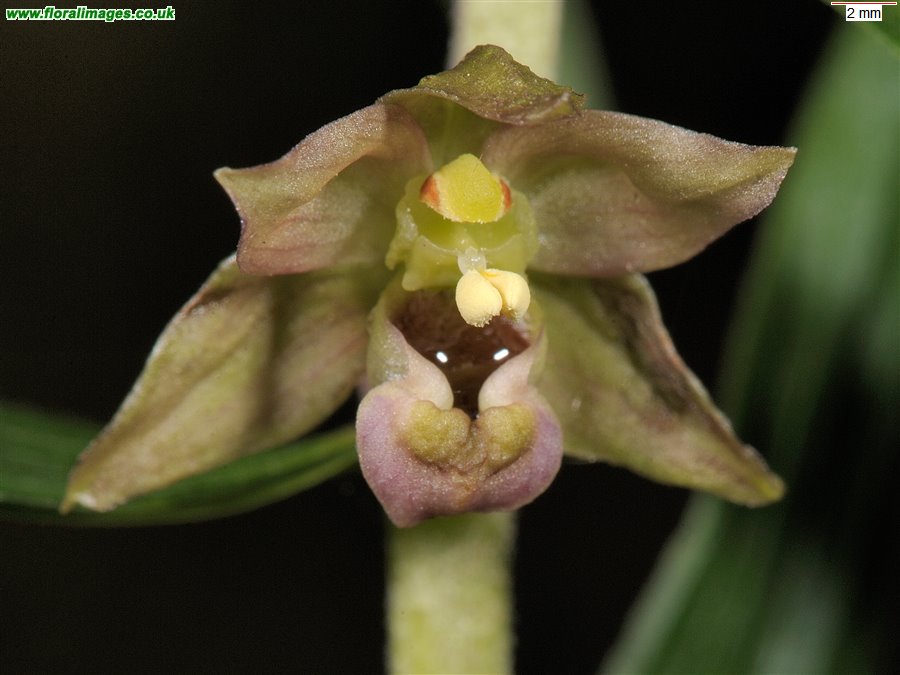
And this isn't that uncommon but a recording scramble at Craig y Rhiwarth this year provided the perfect opportunity for a photograph that shows all (?) the Orchid flower "bits".
Broad-leaved Helleborine
Epipactis helleborine

And the local speciality - visible from our window in theory - if you had a good enough telescope...
Meadow Saffron
or Naked ladies
Colchicum autumnale


Friday, November 30, 2012

Brecon gallery

In the absence of even being in Breconshire for most of the last week I am reduced to reporting a few highlights from my existing Breconshire gallery...

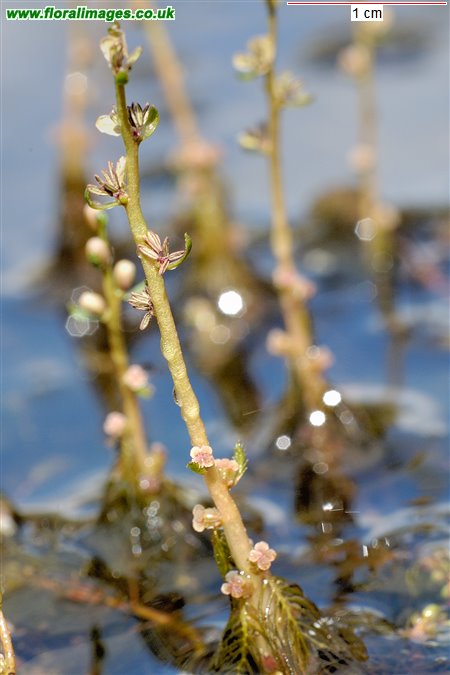
Two stars for me are my first ever sightings of the Myriophyllum genus. I found Myriophyllum alternifolium in a lovely clear stream up near the Brecon Beacons Visitor Centre:

Myriophyllum alterniflorum, Alternate Water-milfoil

Nearby was a plant that stumped me for quite a while - a Charophyte - one of the really quite vascular-plant-like ones:
Chara virgata, Delicate Stonewort

The other Myriophyllum was occupying a casual pool in a limestone quarry near the southern Breconshire border:
Myriophyllum spicatum, Spiked Water-milfoil

And, for something completely different...
Nectaroscordum siculum, Honey Garlic

A garden escape but well established and spreading on the old railway line path in Hay.


Saturday, November 24, 2012

Winter work

I nearly didn't obey the command from my e-diary to "blog". Haven't been out at botany at all.

But the MapMate patch for Stace 3 finally arrived and was accompanied by useful notes allowing me to double check that my upgrading to Stace 3 was accurate (as possible given my limitations...).

Mostly fine. FloralImages will rightly gain some "sens. lat." designations that most punters will ignore...

And Arenaria serpyllifolia is going to be a nightmare for me going forward (not a favourite family...)


So this is now "sens' lat."

I had trouble enough with the old subspecies - let alone allowing for the possible Arenaria leptoclados in future...

As always anyone who spots a mistake / infelicity on FloralImages and has the time to tell me (politely) will be richly rewarded with my undying gratitude and little else.

I've also back-checked the database for species marked as trees. Interesting that there are some you can set from the family and others you can't (eg rosaceae). So my tree gallery should soon be updated with more "Trees and Shrubs".

Friday, October 26, 2012

Catch up

I finally got round to checking out the Conyza that is in profusion around a neighbour's home in the small cul-de-sac we live in in Hay. It turns out to be Conyza canadensis - I generally don't like the term "weed" but in this case it seems to only way to describe it !

Not so the Sand Spurrey I avoid weed-killing near our house. Both of these frequent pavement cracks and no doubt when Powys get round to it total extermination of all life forms will occur... (Our pavement also has flushes of Saxifraga tridactylites occasionally.) The Sand Spurrey seems unconcerned by trampling and is spreading.

Earlier in the week, Steph Coates (Brecon Wildlife Trust) contacted me about about a field near Talybont with abundant Stachys arvensis. It really is a great display for end of October in a field that is obviously resting from a brassica crop... Sad to think that turning the field to grazing like most around the area would see this gone... In fact I wonder if this sort of annual is more under threat than we realise. I only encountered it for the first time way off the beaten track at Foel y Mwnt last year. (A BSBI meeting naturally.)

Before that taking part in the Hay Walking festival turned up this magnificent Pollarded Oak. That was a friend's walk which I back-stopped. My own walk was pleased to find Naked Ladies still in bloom at Henallt Common !

Thursday, September 20, 2012

Back again

OK so it's been another long time...

I intend to visit all Brecon Wildlife Trust Reserves this autumn and started today.

Today I went to Glasbury Cutting - the nearest to where I now live and only 5 years plus to get there. The first thing that shocked me was the evidence of drought - confirming the "rain in summer is useless" argument. It was a very dry winter and the effects were apparent. Particularly in drooping and wilting Hart's-tongue (Asplenium scolopendrium) which I don't think I have ever seen before. Hard to believe there will be be Primroses, Cowslips and "Oxlips" at the far end in the spring - must go back and see. Tsk Tsk to BWT on the Oxlips which I presume will be the False Oxlip (Primula x polyantha)...

The reserve is managed for Dormice but I hope they manage to keep the spring flowers to enhance their environment.

It's also a fun reserve for old railway nuts as you are walking a surprisingly wide old cutting of the Hay / Brecon railway frequented by Kilvert.

Then I went up to Cae Eglwys high above Brecon with stunning views of the Fans and Black mountains. About the limit of my car's capabilities to get up the lane which is surprisingly rough as there is at least one house up there. No doubt they have a 4WD.

Many signs of richness for the spring and summer. Fleabane still flowering. and a nice little dammed stream to investigate. Spearwort was still looking good and I encountered white ones.Close up examination revealed that a yellow layer had been eroded / shed from the surface of the petals; revealing a white layer beneath that presumably accounts for the brightness of the flowers. The flower is still yellow from behind. See my pictures.


Thursday, September 02, 2010

Gap

OK so I haven't updated for a while. Doesn't mean I haven't been active botanically - just too busy !

The website now has a new engine for the main pages - bigger pictures and easier browsing of the pictures of any species I hope...

Thursday, April 02, 2009

Cwm Idwal

First trip for me and early for most botany. But Purple Saxifrage flowers now and will be over later when this botanist's paradise is in full flow.

It took a while to find the first plant below the Devil's Kitchen - but as usual once the "right type of rock" had been identified, finding more was easy.

There were several interesting lichens there as well which I may or may not have identified correctly. The British Lichen Society multi-access key helps a lot, full marks to them - but I still need to know more about lichens to use it to full effect.

The only slight problem with the photos was that  the biggest ever dust particle was apparent on my sensor when I got back - just a little extra work with Photoshop but definitely the downside of a digital SLR.

And the scenery was magnificent as well, naturally.


Monday, March 16, 2009

Filmy-ferns

A trip to West Cork for family reasons but the challenge to find something new for me was the same as ever.

Glengarriff came up trumps with Wilson's Filmy-fern. I was sure this must be there but found that the Tunbridge Filmy-fern I stumbled upon a few years ago, when I hardly knew what they were, is very much dominant there. (In places the plant is abundant.)

The identifcation is hard as well but, as usual, once I found it I realised straight away that this was "significantly different" - and there is only one other species in the genus in the UK.

They were growing together with Wilson's higher up the tree trunk on which I found them.  To me the longer vein cells were more diagnostic than the vein ends being at the end of the frond - I find that even with a x10 lens the vein ends of the Tunbridge fern are often at the end of the leaf to my eyes.


Tuesday, June 24, 2008

Llangors

We (the U3A hay Botany group) were invited to explore some botanically rich meadow land near Llangors lake by the Biodiversity Officer for the Brecon Beacons Park Authority. Frankly the botanical riches were a little overwhelming for us but, as the afternoon progressed were able to assist in identifying three good sites for seed harvest (collecting seed for other Brecon Beacons Park meadows) later in the month and identify some of the species at these sites.

A few we found:
Hypericum tetrapterum, Square-stalked St John's Wort
Lychnis flos-cuculi, Ragged Robin
Anthoxanthum odoratum, Sweet Vernal Grass
Cynosurus cristatus, Dog's Tail Grass
Trifolium dubium, Lesser Trefoil
Trifolium micranthum, Slender Trefoil
Lathyrus pratensis, Meadow Vetchling
Lotus corniculatus, Bird's Foot Trefoil
Leucanthemum vulgare, Oxeye Daisy

Saturday, June 14, 2008

Getting lucky

Odd to walk past some Tree Mallow growing near Grove Park in Weston-super-Mare almost every day for several years and never notice it in flower (maybe it takes a while to mature enough to do so...). So when I went back there from the new abode last week it was good to see it in full bloom.

Not to the top

I had to tell more than one exhausted "peak bagger" that actually I wasn't going for the top on Snowdon last week. A good botanical site nestles below the cliffs to the east of the peak and the main path is the way to get there until about the 3/4 point where you turn off.

Nice to get a cup of coffee on the way down though - thanks to the popularity of the main path and the fact that the cafe at the top is currently closed. Also it was good to see the railway (only going 3/4 way at the moment itself) chugging up and down - not such a blight on the landscape as I had imagined it would be. One day I may bag the peak - but that isn't the way for Northern Rockcress, Parsley fern and Roseroot, amongst other new things for the website.

It was good to see Thrift so far from the sea as well.

I was actually hoping to find a very local speciality but it wasn't obliging this year. There is always 2009 !

Thursday, May 08, 2008

A great walk and my front garden

Last Saturday was my first BSBI field trip of the year and, as ever, it was great. Emily lead us on a tour of the Dinas Bran area behind Llangollen with breathtaking views, some great botany and knowledgeable company to help me learn more about the subject.

For me the highlight was Changing Forget-me-not. By no means a rarity but probably unknown to most casual walkers. It has minute flowers with the charming characteristic of starting out bright yellow and then changing to a more Forget-me-not blue later.

My "front garden"

Well I don't have one, having opted for a town house, but the pavement outside the front door has already offered a display of Rue-leaved Saxifrage and now (while clearing the asbo weeds) I find a Spergularia - which turns out as expected to be Sand-spurry - Spergularia rubra, after a lot of hand lens searching for (scarce on this one) glandular hairs.

Wednesday, April 02, 2008

Yellow Whitlow-grass

Some flowers require a special trip. This is one of them - it only grows at all in the UK on the Gower and it flowers in March / early April. So off I went.

I tried three possible sites. The first I drew a blank - probably because I wasn't getting the location quite right - but I cut my losses and tried possibility two. That was bereft, I am sure, of a current population.

But Pennard Castle came up trumps and the display was splendid. So a great deal of (very enjoyable) walking and three separate parking charges paid off in the end. The plant loves to grow in pockets of poor soil in rocks - or in this case crumbling ruin walls.

The view from the castle was stunning as well.

Once again the excursion had me reflecting on the unsatisfactory nature of "bagging" finds. It would be so much better (IMHO) to spend one's life walking the great botanical areas of the country all year round and stumble upon species as if by accident. But it would take more than a lifetime to find it all !