Pages

Tuesday, August 25, 2015

August

This is a catch up - we have been busy!

A while back several of us gathered in the Grwyne Fechan Valley for unfinished business from last year. Mike and Chris would do the lane near the car and three of us set up along McNamara's Road to explore the upper valley.
Passing a Beet field with plenty of arable weed species
 Crossing the Grwyne Fechan at Tal y Maes Bridge 
We completed the exploration of the target squares started by myself last year and established that one of my imagined species from last year probably wasn't there after all...

My camera didn't come out of the bag so the pictures above are thanks to Sue. We got back to the cars all at roughly the same time, Mike had found many different Brambles amongst a long list and our circular tour had given us plenty to record.

Then two of us went back to restricted areas to complete the National Plant Monitoring Scheme work and look at a field for the landowners.

I don't like trying to identify Burdocks so this went into my records as uncertain:
Wood Burdock, Cyngaf bach or Arctium nemorosum; or is it?

We found substantial numbers of this again:
Mountain Pansy, Trilliw y mynydd or Viola lutea

It doesn't make the Brecknock Rare Plant Register - based on records made in the 1980s but it looks like it will stay off it going forward from recent results - good news.

Heather, Grug or Calluna vulgaris
- flourishing where all but the most adventurous sheep have been kept out.

And here is a Harebell - photographed solely because it was a photogenic specimen...
Harebell, Clychau’r eos or Campanula rotundifolia

Most recently I actually got physical at Allt Rhongyr BWT Nature Reserve, helping (a little) with Bracken slashing, and then went around the reserve finding Autumn Gentian Sites and taking these photographs which I think illustrate what a great reserve it is.

Autumn Gentian, Felwort, Crwynllys yr hydref or Gentianella amarella (picture taken in 2013)

Stop Press: these just in from Sue who was there last Saturday.


Sunday, July 26, 2015

More of the same

We continued our survey of the land near Allt Rhongyr last week.

Picture by Steph who was Bracken-rolling on the reserve

The additions to our list from the week before were relatively few - but significant. Also we established that some species we saw the week before in small quantity were, in fact abundant. Examples follow:

Small Scabious, Clafrllys bach or Scabiosa columbaria (here proliferating a bit from the inflorescence)

Common Rock-rose, Cor-rosyn cyffredin or Helianthemum nummularium

Wall-rue, Duegredynen y muriau or Asplenium ruta-muraria

And this wasn't abundant but definitely present in fern-rich scree:
Green Spleenwort, Duegredynen werdd or Asplenium viride

Tuesday, July 21, 2015

Near Allt Rhongyr

But not in the reserve. We set out up a species rich lane to record in some privately owned land nearby (and therefore recorded the lane as well for general reasons).

It was nice to find a really good stand of Brittle Bladder-fern near one of the many cave entrances in this area:

Brittle Bladder-fern, Ffiolredynen frau or Cystopteris fragilis

Mike showed us a particularly attractive Blackberry - one of the many species he has recorded and helped to identify in our area:
Rubus vestitus (as the only online resource I could find that even attempted a common name calls it: "A Bramble")

When  we got up to the limestone-influenced level we started to find many more choice plants  - including another rarity from a difficult genus:
Hieracium repandulare, Repand-leaved Hawkweed

"A Welsh endemic locally frequent in the Craig y Rhiwarth area and at Craig Cerrig Gleisiad." (BSBI Atlas of British and Irish Hawkweeds). A pity we were too late for the flower...


John and Mike approach a cave entrance (picture by Sue)

Tuesday, July 14, 2015

Near and Far

I set out to record what was growing wild in my immediate environment (Hay-on-Wye) last week and my first outing didn't take me even 100m from the house before I was back to identify some specimens. Things growing in pavement cracks can be harder than usual to identify - especially if trodden on!

Among these were: (none of these photographed on the day or where seen...)

Slender Pearlwort, Corwlyddyn unflwydd or Sagina filicaulis (Sagina apetala subsp. erecta)

Thyme-leaved Sandwort, Tywodlys dail teim or Arenaria serpyllifolia


I didn't get a lot further in my second outing so another session will be required to do the 1km square justice.

Then at the weekend I went to Plas Tan y Bwlch near Porthmadog for the Welsh AGM of the BSBI. Saturday's field trip saw a group of us doing a 1km square near Trawsfynyyd with a quarry and upland with interesting geology. Thanks to the excellent botanists in the group 160 or so records were made in the square including a "Vicia bingo" - all the Vicia species on the Merionithshire card were ticked off after a late discovery of Vicia orobus in a field at the farthest point we got to.

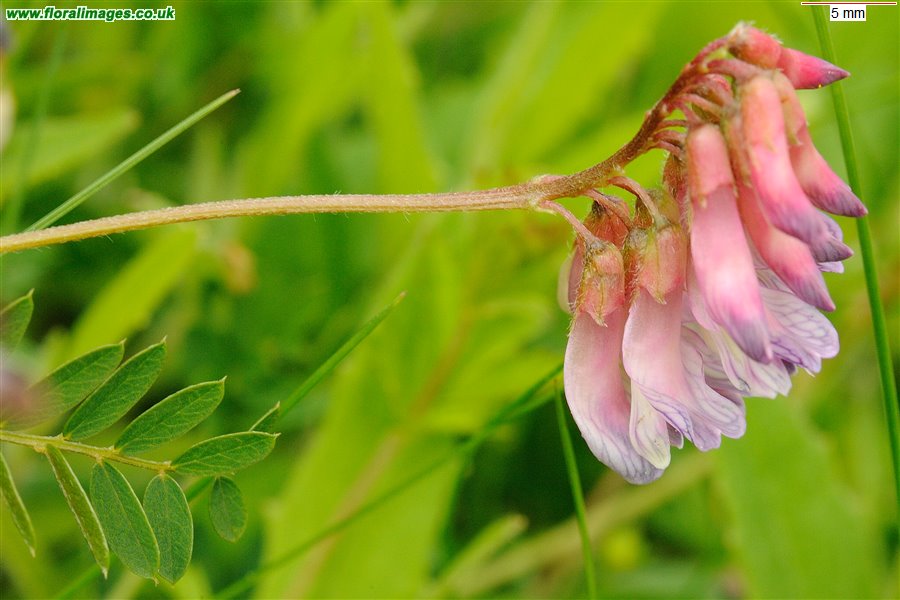
Wood Bitter-vetch, Ffacbysen chwerw or Vicia orobus (A Brecknockshire picture)

Another good find - requiring very sharp eyes on the part of a colleague:
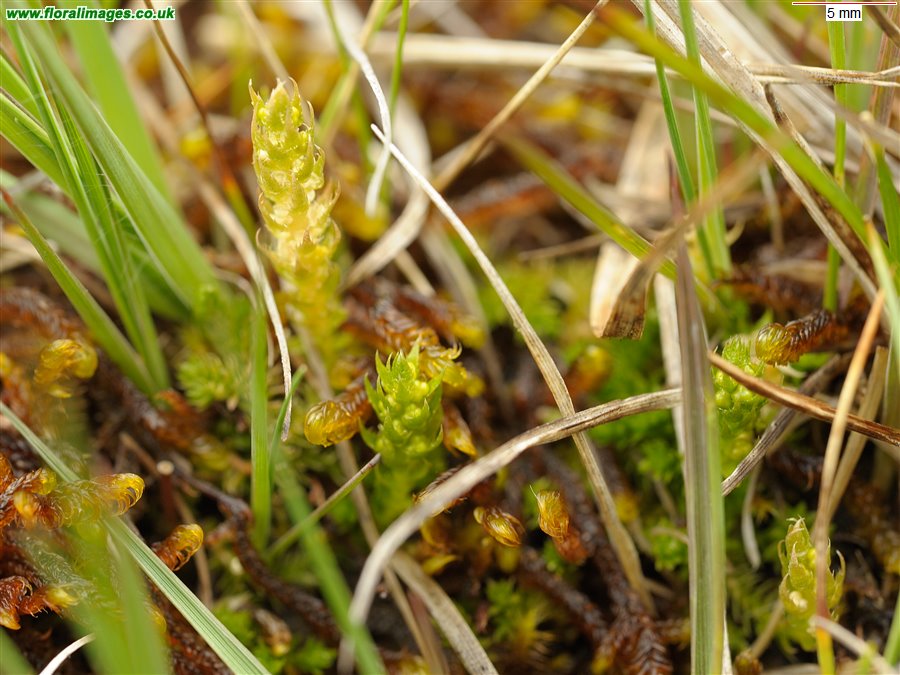
Lesser Clubmoss, Cnwp-fwsogl bach or Selaginella selaginoides


Monday, July 06, 2015

Beaten by Midges one day, then Kenfig

Only two of us offered ourselves as sacrifice to the fierce midges of the Nant Tadarn valley - a tributary of the Towy in farthest Northwest Brecknockshire - but it was worth it even if they probably shortened our visit.

This area hasn't recorded for a whole and was, it has to be said, dominated by a few species (Mat-grass and Star Sedge among them) so the number of records was small. But we did find rocks with Fir Club-moss and a single Parsley Fern. Records of the latter pop up from time to time in this area over the years but not often. (It is much more abundant high in Snowdonia.)

Fir Clubmoss, Cnwp-fwsogl mawr or Huperzia selago

Parsley Fern, Rhedynen bersli or Cryptogramma crispa

The latter wasn't the happiest plant I have ever seen but there were lots of decayed leaves from last year and it appears to be withstanding the attentions the local sheep able to reach up to it.


And we also found Bladder Sedge at the source of the Nant (together with abundant Marsh Violet plants):
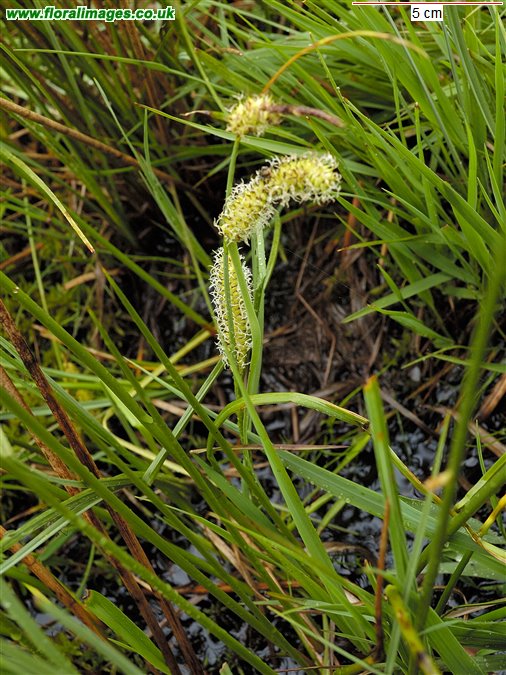
Bladder-sedge, Hesgen chwysigennaidd or Carex vesicaria

Then four of us gathered at Kenfig Visitor Centre for Brecknockshire Botany Group's first foreign visit. It was great to be just doling botany without having to record - and we all learnt from each other in a variety of ways. The flora was of course also rather different from that we are used to.

Early Marsh-orchid, Tegeirian-y-gors ar or Dactylorhiza incarnata
Adder's-tongue, Tafod y neidr or Ophioglossum vulgatum (we saw this in abundance)

Lesser Water-plantain, Llyriad-y-dwr bach or Baldellia ranunculoides
Examining Fragrant Agrimony

And, as we set off back towards the cars, we stumbled upon several plants of the Rare Fen Orchid that grows at Kenfig, having failed to find it at a currently-known site earlier. It has been recorded here in the past but this refind delighted the Warden.
Fen Orchid, Tegeirian y fign galchog or Liparis loeselii - note Adder's Tongue and Marsh Helleborine adjacent to it.

Friday, June 26, 2015

Bwlch

We made a start on my National Plant Monitoring Scheme square on Thursday. "SO1522" or a 1 square kilometre of land mostly above the small village of Bwlch on the A40 and conveniently accessible. We had to select three 5m squares from a grid of suggestions (with licence to move them for convenience) and two linear plots 25m long and 1m wide.

In addition I had every intention of trying to record everything we could see anywhere in the square as I normally do.

We were greeted on the Beacon's Way as we entered the square by festoons of Ground Elder in flower. (I'm much more used to seeing leaves.)
Ground-elder, Llysiau’r gymalwst or Aegopodium podagraria

The moorland high up looked uniform and selecting places to record wasn't easy, but convenience and ease of locating the site again in the future suggested we set up our first square by the cairn:
Our first recording square with 5m square laid out using a rope with knots every 5m.

Doing this proved a long process - mainly as it took a while to work out which grasses we had in the square - but this proved to stand us in good stead for the rest of the day with it being quite easy at each subsequent area to tick off most of the species quickly and then explore for "new" ones.

In fact I now feel this is quite a good approach for recording in relatively uniform landscape
- pick a likely patch and do all the grasses before moving on...

We moved on over the hill to the next area and found a suitable recording area near the second path across the hill and then went downhill where we came upon a deeply cut stream, not on the OS map, that presented an ideal natural line for the first linear plot.

And very productive it was with:
Slender St John's-wort, Eurinllys meinsyth or Hypericum pulchrum

Tufted Forget-me-not, Sgorpionllys siobynnog or Myosotis laxa

Bog Pimpernel, Gwlyddyn-Mair y gors or Anagallis tenella

Then further down the track Sue spotted this - which I had already passed by:
Trailing St John's-wort, Eurinllys ymdaenol or Hypericum humifusum

Not one that gets onto the NPMS data but a definite record for the square for BSBI Atlas purposes.

And so to Bwlch Quarry - long since abandoned and freely accessible with one of the 5km suggested squares right on the quarry floor:

Here we set up a square exactly where proposed by the NPMS map and found this plant amongst many others. There is a definite sign here that quarrying Old Red Sandstone releases rich interstitial rock which can support a wide flora:
Common Cudweed, Edafeddog lwyd or Filago vulgaris

There was also abundant Fairy Flax and Carline Thistle.

There was plenty to record on the way back to the car along the lanes - we identified the second 25m linear plot but didn't formally do it - out of time...

This was definitely a garden escape in this environment:
Monk's-hood, Cwcwll y mynach or Aconitum napellus