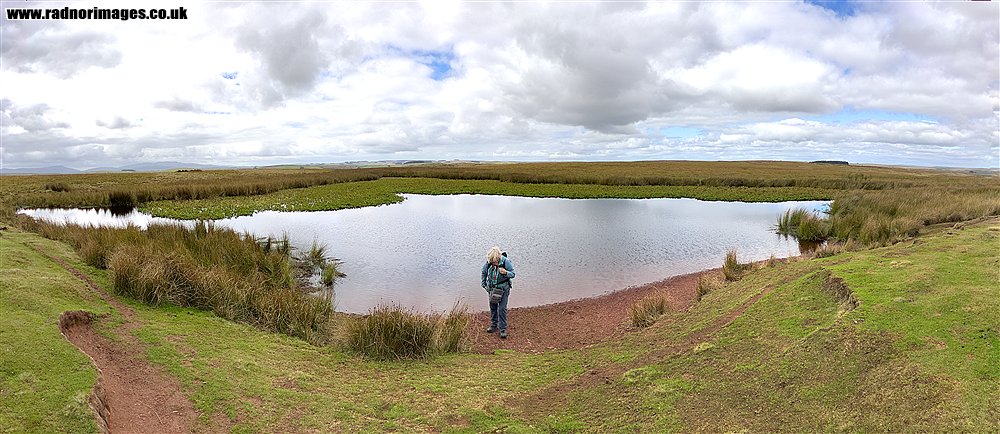
Middle Epynt Common* has hardly been recorded before apart from Bogbean being noted for Llyn Dwr (Water Lake) in 1990. So we went to find out what was growing there.
It was a four mile trek in all (with Stephen running a further mile to check out a small waterfall). So the short plant list for the five kilometre squares covered in the day seemed a disappointment but I realized later that this probably reflected the fact that the upland is very natural and unspoilt. Even Molinia caerulea or Purple Moor-grass seemed to be a relative newcomer on this heathland as it grew in vaguely circular patches in places where it grew at all.
There was plenty of Western Gorse and a very little Common Gorse:
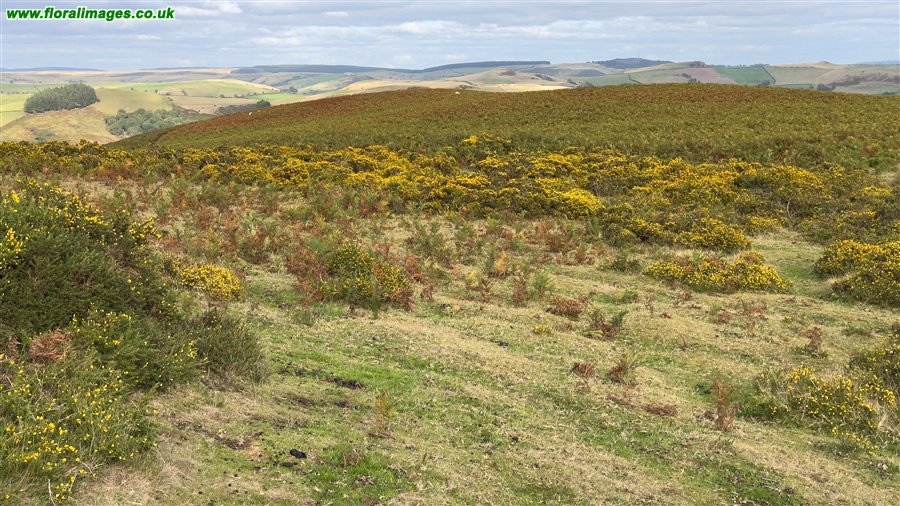
There was of course plenty of Bracken - visible in the background of the picture above - and it was being actively controlled while we were there.
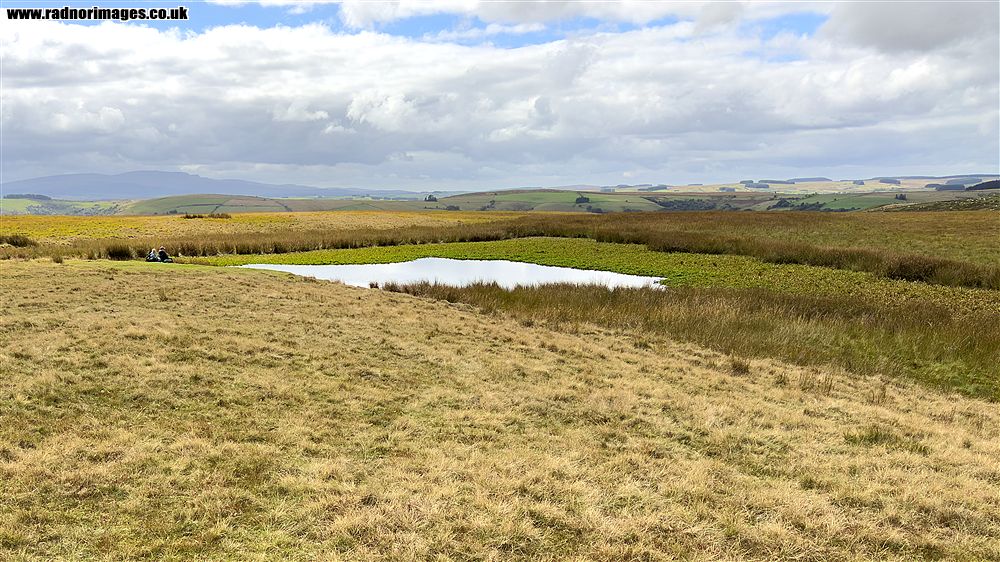
The Bogbean was still dominating the lake:
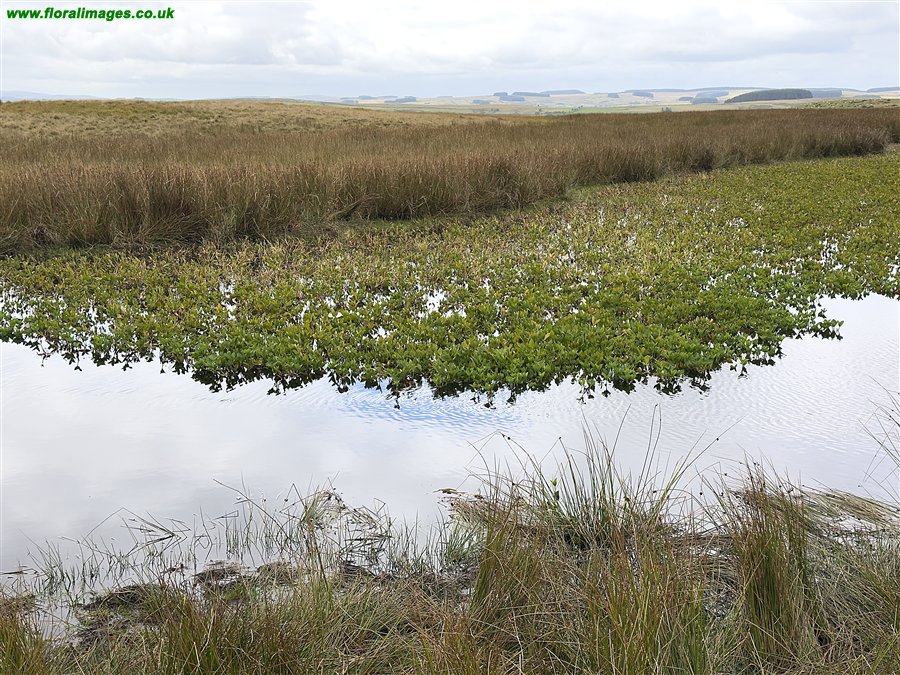
- with just a little Bog Pondweed as the only other vascular water-plant we could find.
There was plenty of Ling and Cross-leaved Heath everywhere.
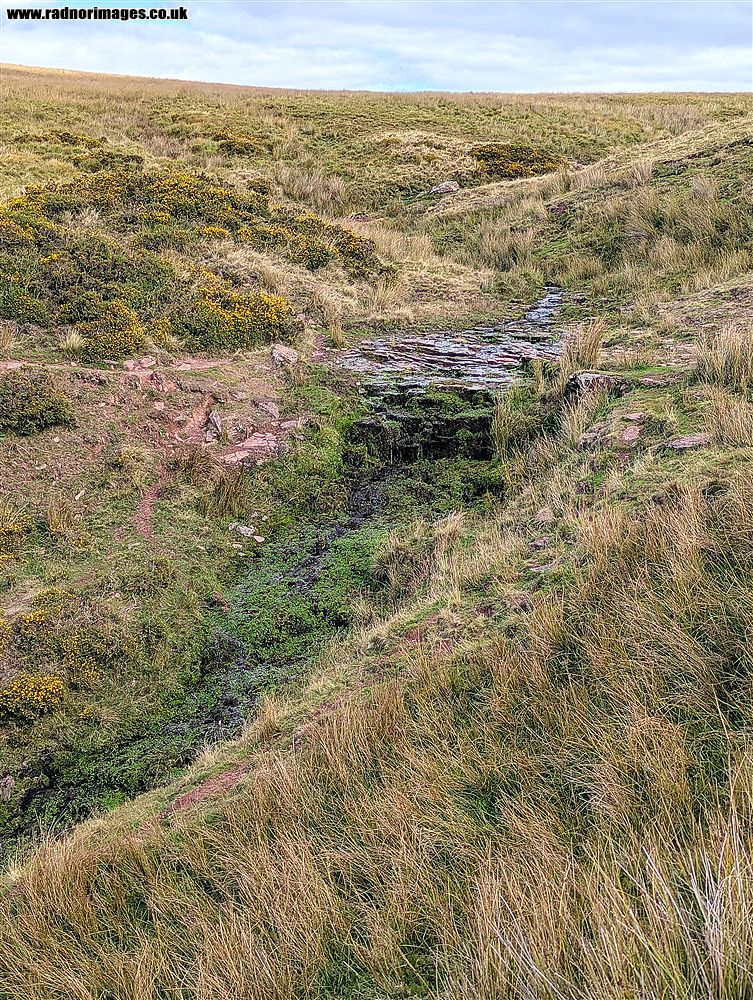
The small waterfall:
* The registered name in full is "Middle Eppynt, Merthyr Cynog"
