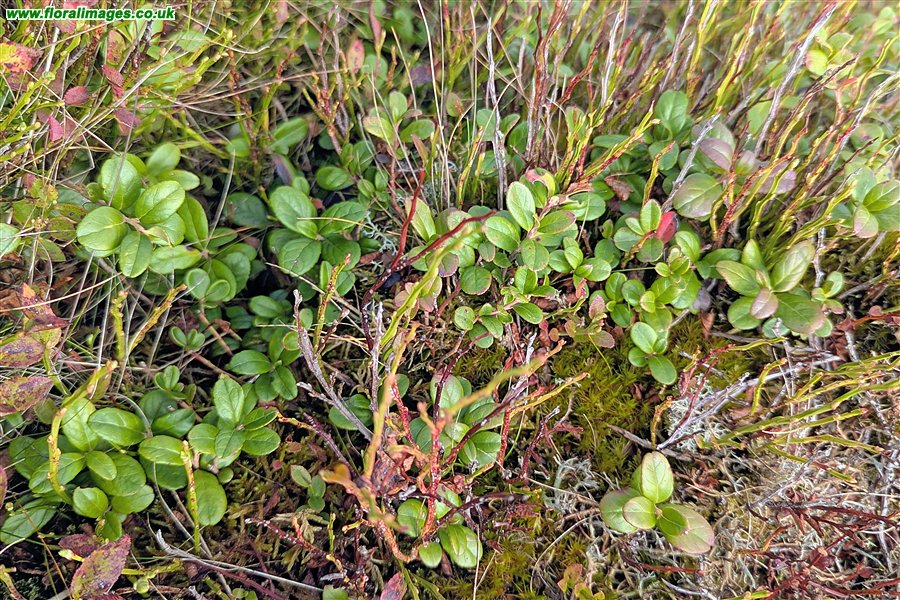
Cowberry, Vaccinium vitis-idaea found by Stephen in a place not recorded before on the east of Llangattock Mountain.
5km from the nearest previously known sites. This is one of those plants we are always happy to find. The name perhaps suggests that the red berries are not for humans?

Cowberry fruits (Nant Gewyn, Abergwesyn Commons)
On a recent walk around the Bronllys Hospital site I spotted this in the woodland:
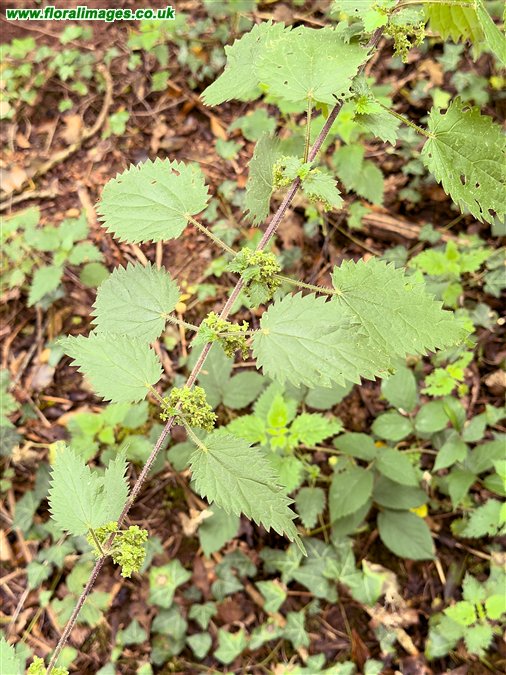
Stingless Nettle, Urtica dioica subsp. subinermis
Most of it was in the typical tall stands but this prone stem was easier to photograph! One of its characters is a long barren stem below the flowering nodes so this is the top of a long stem. It's a botanists' party trick to go up to this and grab a leaf - entirely sure of no pain.
Also there was this undoubtedly planted small tree / shrub:
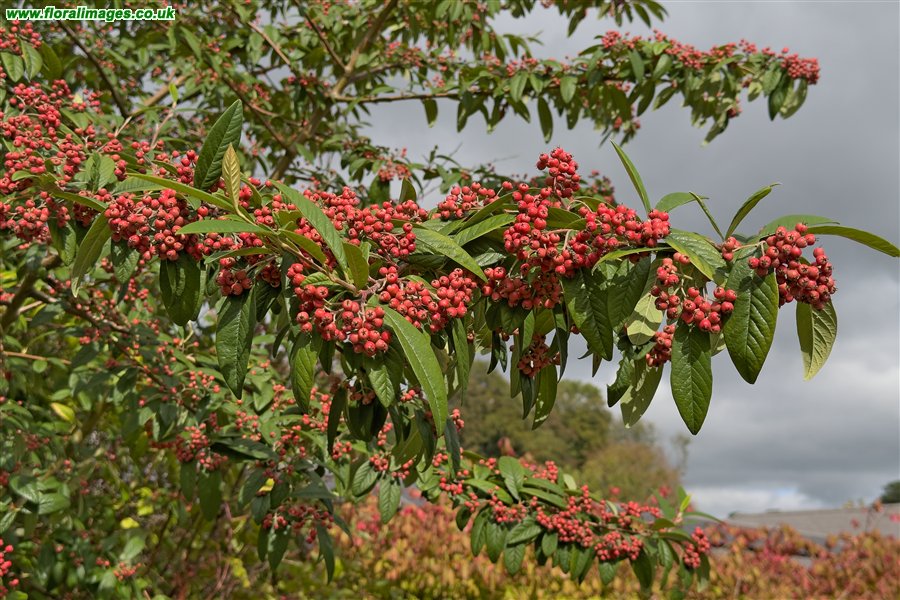
Late Cotoneaster, Cotoneaster lacteus
I am pretty sure of the identification but this genus is tricky... This species is normally very late in producing ripe fruits (November) and I am assuming the very hot summer brought ripening on sooner than usual. This plant originated in South-west China. There are at least 100 known Cotoneaster species in the country - all are introductions apart from the very rare Cotoneaster cambricus in North Wales.
We made a first visit for the group to Pwll-du, high up on the commons to the west of Erwood. The dominant water plant was this:
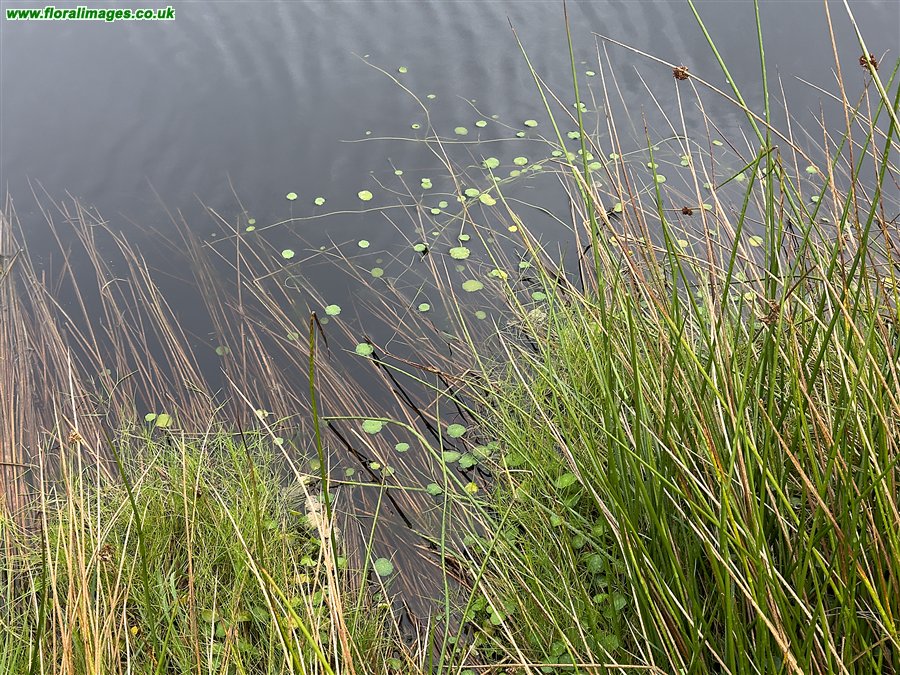
Marsh Pennywort, Hydrocotyle vulgaris at Pwll-du
It is usually a plant of water edges and marshes so here taking to a more aquatic life option. Several other choice water plants have been found in the past there, most of which we could not find on this occasion. We moved on to the Nant yr Offeiriad Valley nearby where we found many interesting plants by the young river. The only picture I took though was of this:
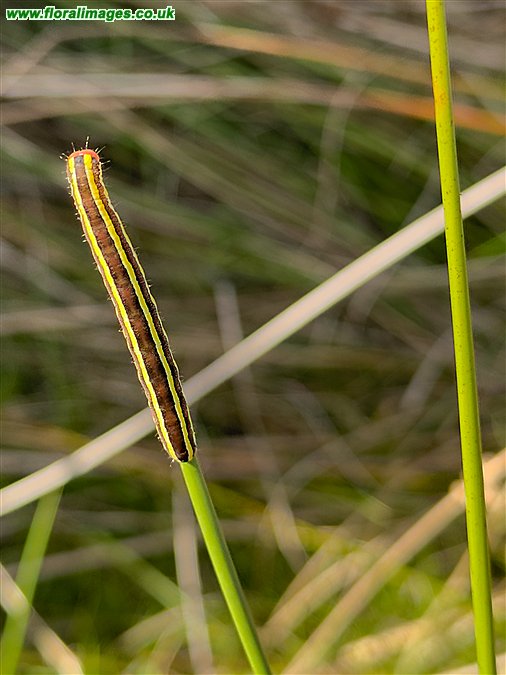
Broom Moth Caterpillar, Ceramica pisi according to AI
"Despite what its common name suggests, it is a polyphagous feeder. While it loves Broom, it frequently feeds on a wide range of plants, including Bracken, Bramble, Birch, Willow, and various grasses or herbaceous plants." It looked like it had climbed the wrong plant at the top of a Rush!
Tess and Bob visited nearby Pant y Llyn later on and found this:
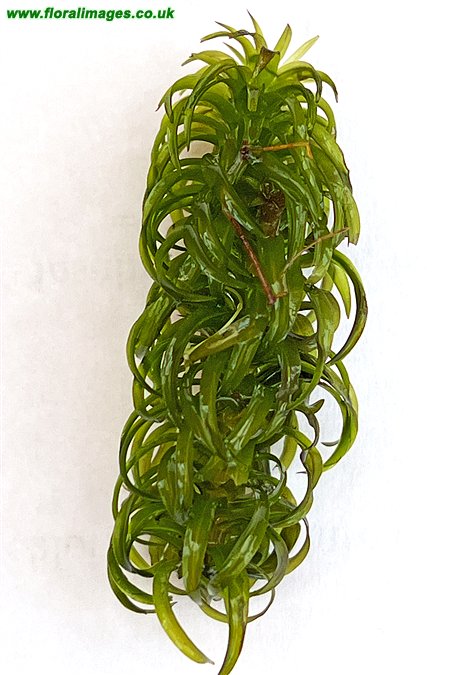
Curly Waterweed, Lagarosiphon major, Robert Peat
Not a surprising find but the first record for it there.
Then this popped up in Brecon - spotted by Joan:
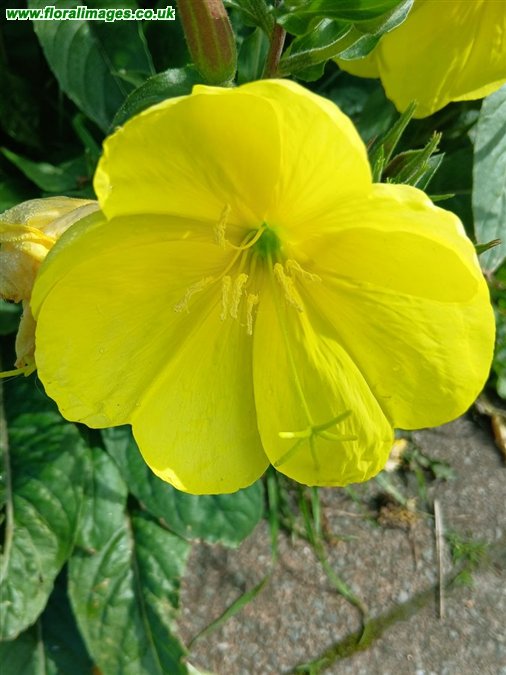
Large-flowered Evening-primrose, Oenothera glazioviana
A casual (but welcome) occurrence in Breconshire and less common than the smaller-flowered species.
I joined a WTSWW visit to Pwll yr Wrach with Alan Bowring guiding us through the geologically interesting areas of the reserve.
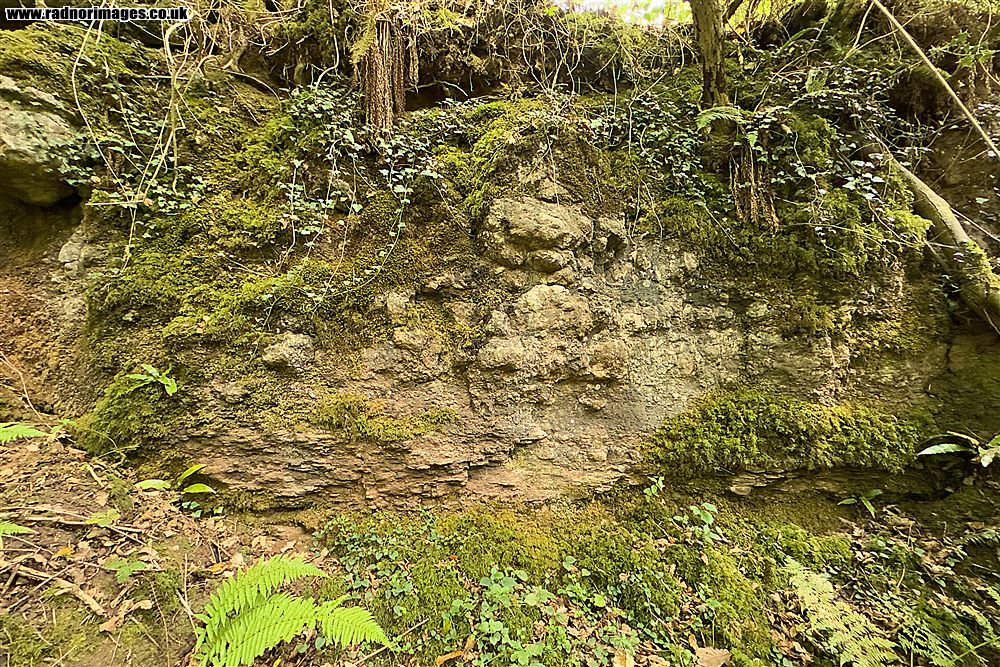
We saw this exposure of Bishop's Frome Limestone - an important geological feature of the county for botany. (It has several other names but I am using the one I am used to!)
The waterfall was showing quite a low flow rate but always worth a picture:
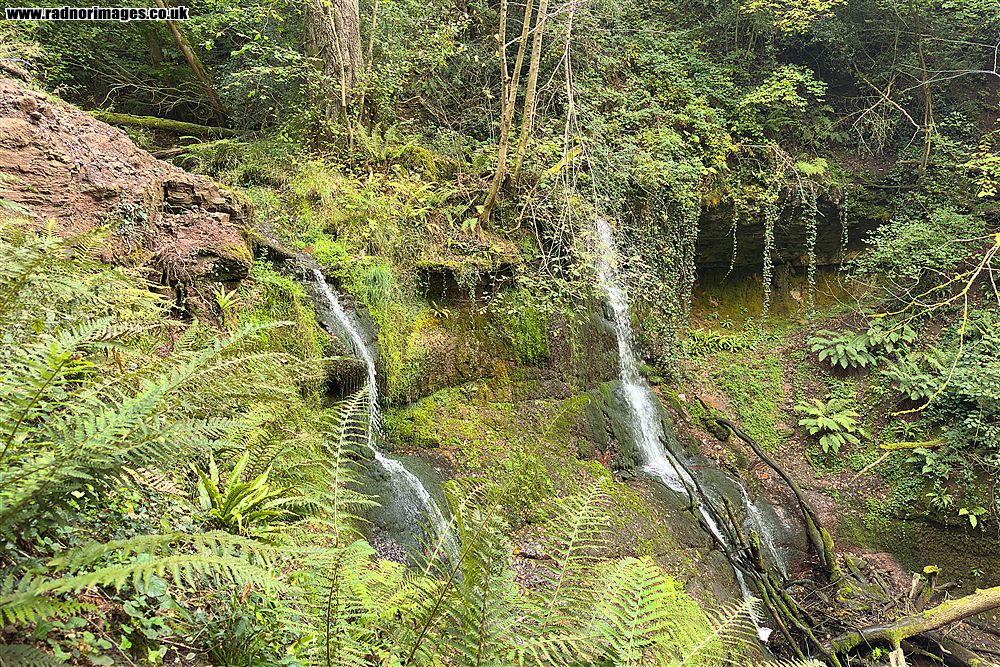
We spent some time examining and hopefully understanding the various layers of rock exposed in this area.
And this was spotted not far away - appropriate for Hay-on-Wye's Fungi Town event that weekend.
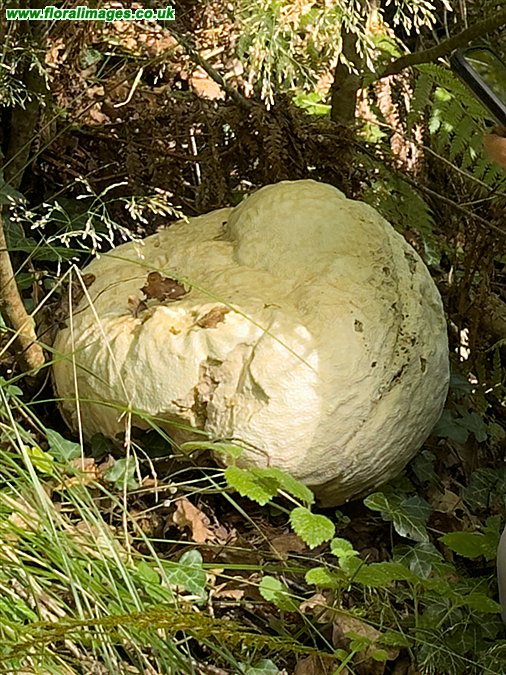
Giant Puffball, Calvatia gigantea
And finally - Arlene has been reviewing her photographs taken of the new population of Pyrola minor near Caehopkin that she found in 2020. This plant (a little distance away from the main population) is clearly the closely related but distinctively different Pyrola rotundifolia. Both are found in the same type of habitat (including in nearby Glamorganshire woodlands).
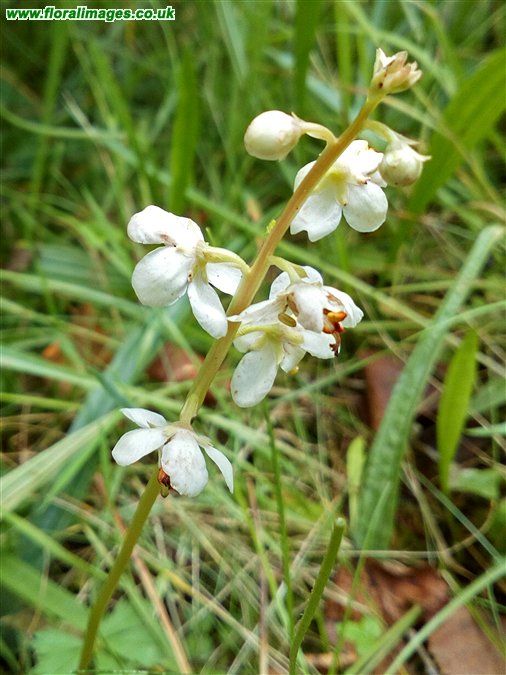
Round-leaved Wintergreen, Pyrola rotundifolia
This is a completely new record for the county - dated back to 2021.
