Pages

Saturday, June 08, 2013

Searching high and low

A good week of ideal botanical weather. For the walk at Darren Fawr Steph and I were joined by Paul Green (BSBI Welsh officer) and Mike Porter for what turned out to be a very enjoyable walk and also a great educational day for the two less-experienced of us. So many more records were noted by me for two one kilometre squares than would otherwise have been.

An example was a patch of Trifolium micranthum (Slender Trefoil) spotted by Paul - who was able to point out the rather deeper yellow colour compared to the common Lesser Trefoil and the small notches on the standard of the flower.

(This picture of Slender Trefoil wasn't taken last week...)

We were hoping to see some of the rare Whitebeams up there but missed those - however we did find the one site in Breconshire for Rigid Buckler-fern, Dryopteris submontana, a close relative of the woodland Male-fern.
Paul Green with Dryopteris submontana

This fern is covered with tiny glands on both leaf surfaces

Then yesterday I visited a very wet meadow in the Ewood area where one of my recording group has found Globeflowers and other interesting plants such as American Skunk-cabbage, Lysichiton americanus:

Not from yesterday as it was past flowering

Globeflowers near Erwood

Much of this meadow was dominated by Oenanthe crocata, Hemlock Water-dropwort which must make quite a sight when it comes into flower. I've never seen so much in one place.

Hemlock Water-dropwort in Somerset

Earlier in the week I was on a much needed grass identification course courtesy of BIS. A very valuable two days for me with excellent instruction from Sarah Watson-Jones. While looking at meadow grasses in Craig-y-nos country park we encountered this Marsh-orchid:

Saturday, June 01, 2013

"Mixed Tussocky Moorland, Alder Carr Woodland and Meadows"

Well the full "promise" from Steph and myself was "We will walk up through some mixed tussocky moorland, Alder Carr woodland and meadows before returning on the footpath from Nant y Beudy".

In the end we couldn't quite achieve this - being frustrated by a new deer fence of which we were unaware. The going was hard, we had to turn back eventually and go by car to the final meadow but boy was it worth it !

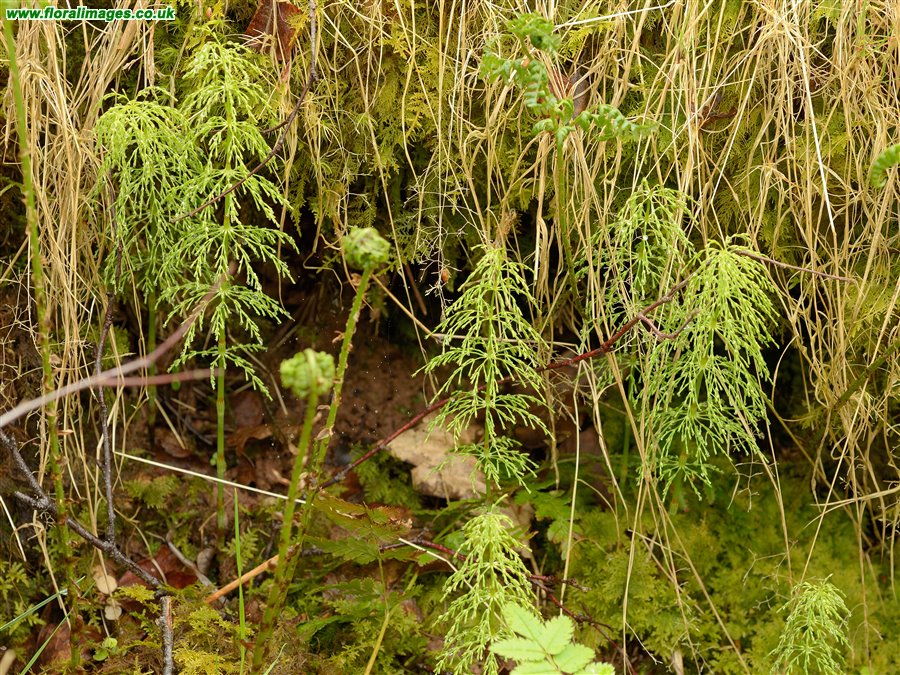
The prettiest of the Horsetails, Equisetum sylvaticum, abundant near Crai

The estate had been assessed by Steph in 2007 and was well worth a return visit (with permission of course - this is private land). The difficult going is partly due to grazing by cattle and the wet local climate but it made for interesting botany and quite some challenges for us to identify things not as far advanced as would have hoped.
An example would be the Lousewort we encountered that appeared to have the diagnostic "second pair of lateral teeth" on the flowers to make it Marsh Lousewort but proved on further examination to be the common species. Only to encounter rosettes we are fairly sure are of the Marsh species later on:
Marsh Lousewort - yet to flower

In all we managed to record about 80 species we could identify with certainty - a rich area.
But then the deer fence problem thwarted us and we elected to retrace our steps and use the car to get to Steph's meadow from 2007 with "some" Globeflower. My expectation of "some Globeflower", based on experience (with the honourable exception of speciality reserves like Cae Pwll y Bo) is not  for what we found:
Globeflowers near Crai

Our conservative count of plants gave a figure of at least 110. So all in all an exhausting but rewarding day for me and I hope for my companions.

Friday, May 24, 2013

Talybont reservoir and Brechfa

There were several of us at the far end of the reservoir for this botanical exploration and it was a great environment to spend a day in.


Once again - many eyes made for more records; we all learnt stuff we didn't know before and made a contribution to the development of this area as a local nature reserve.

I brushed up on my Sedges with a few I couldn't identify straight away such as Carex disticha, Brown Sedge.

This was Greater Tussock-sedge, Carex paniculata

Then on Thursday I met Phil Sutton of Brecon Wildlife Trust at Brechfa Pool for the setting up of a small cage for an experiment with restricting grazing on one of the rarer plants there. 

The damp grass around the pool was peppered with Blinks in flower - a delightful sight of an overlooked little plant.


Montia fontana subsp. chondrosperma (Blinks)


Saturday, May 18, 2013

A verge and a wood

I joined Steph Coates and several of our (Brecon Botanical Recording) number on Wednesday to take a first (?) look at a RVNR high up above Llangors lake. These Brecon road verges can be very botanically diverse and rewarding to explore and this was no exception.

The most unexpected find was "Hidcote Comfrey" well-established in the wild:


But we also saw good populations of Common Dog-violet, Cowslips, Moschatel and much more. (More than 70 species).

Goldilocks buttercup was found as expected on the lower verge - it seems to be a good spring for this species, which I gather from Stace is like the Dandelions in reproducing asexually and, on the continent botanist have over 100 micro-species to determine (if they wish). No wonder Nigel Farage wants us out of Europe !
Goldilocks, Ranunculus auricomus, the upper leaves are characteristic and many flowers are imperfect in most populations - with a petal or more missing.

I also came across a good crop of Goldilocks on the path up the Login brook to Hay common the next day. I've passed there many times at different times of year and never noticed it before. It was in bud and just about to flower then so now is the time to go if you want to see this. It's only just past the graveyard where you go into the Login cwm.

I was on my way to Rook wood and this route looked promising. There were some lovely views.


This path brought me to the top end of the wood so I was able to record the marginal trees as I walked along the fence. It turns out there is no proper entrance though until you come well down the far side so it's not the ideal route to the wood as it turns out. I spent a good time in the wood, not finding anything very special but seeing many good woodland species and noting that there is a fair population of tall Wild Cherry tress all through the wood from the flowers strewn below.

Wild Cherry, Prunus avium - it's only "Bird Cherry" in Latin !

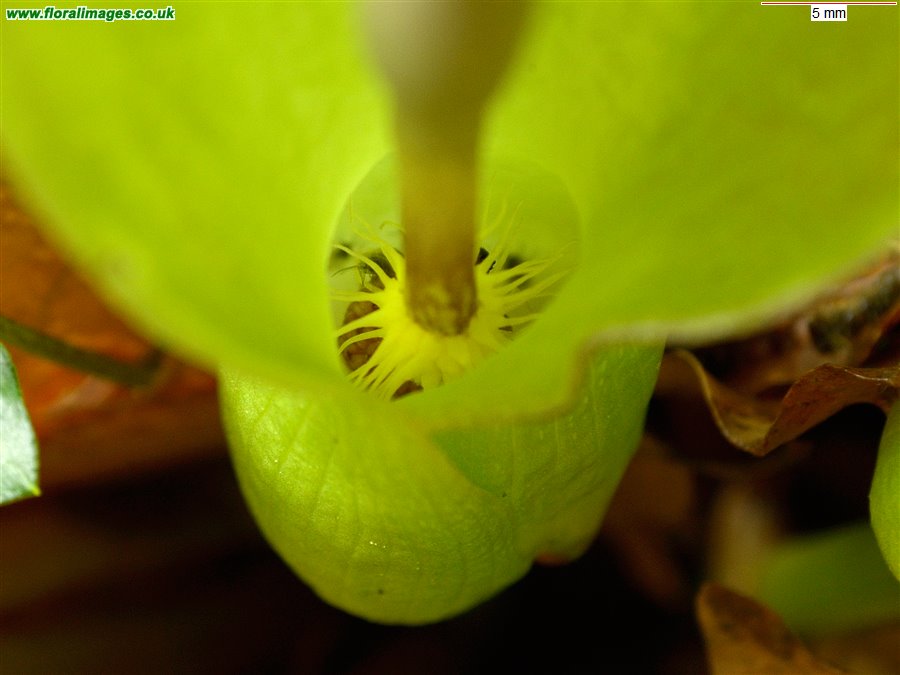
It was also good to sit next to a very fresh Arum flower and listen to and observe all the trapped insects inside:


The bluebells here were probably about a week before their best - and already very impressive.


Saturday, May 11, 2013

Limestone pavement - mainly

My education about the landscape of Brecon continues - in the sense of actually seeing what I vaguely knew about in this case.

Conditions looked rather better than forecast when Joan and I set out from Penwyllt to go into the Ogof Ffynnon Ddu National Nature reserve. (This was to change but a good start.)

Green spleenwort

We got to an enclosed area of limestone pavement and did find Convallaria majalis as well as plentiful Geranium lucidum (uncertain at first because I was unused to such lush growth as we saw). Little was flowering yet though (apart from Carex flacca, Wood Anemones, Dog's Mercury  and Cowslips) and its definitely a place to go later in the year (and explore a wider area). We were too soon encouraged to make our way down again though by descending cloud that would have made straying off the paths (old tramways) unwise in any case.

Lily of the Valley in an unexpected habitat

I had intended to go further to a site for Antennaria dioica - that will have to wait - but realised when I got back that it should have been around near where we were - either we missed it or no flowering spikes yet - it may even be that some vegetative growth I surmised to be Mouse-ear Hawkweed was in fact the Antennaria? (My off-season vegetative skills have a little way to go but studying Poland - Vegetative key after excursions is helping me here.)

Antennaria dioica in the Burren

And I nearly forgot - Joan found a plentiful population of Saxifraga hypnoides when we were slightly off the main path (finding our way) soon after we set off.

Friday, May 03, 2013

Builth, Cwmdu and Gilfach

It took a few minutes for me to realise what I had encountered here on the Brecon bank of the Wye at Builth Wells on Monday:


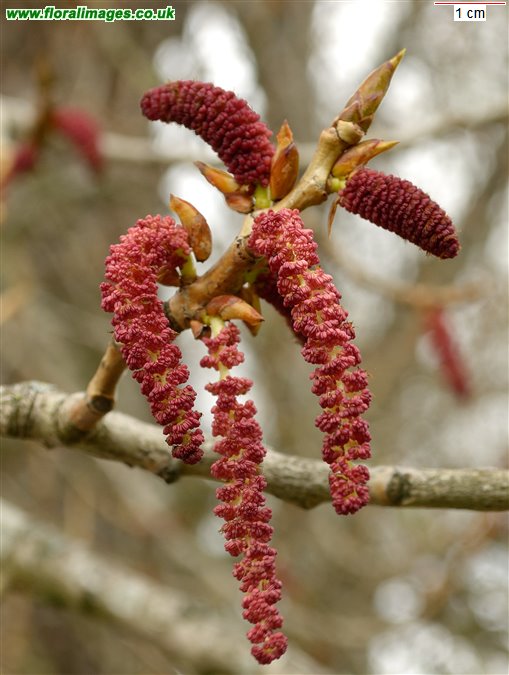
But Black Poplar emerged as the answer eventually. I reasoned from the available evidence that this is a true native Populus nigra subsp. betulifolia so it was encouraging to find that Mike Porter has already determined it as such !

A grand tree anyway:

Then Sue and Joan came along to Paramor orchard near Cwmdu to explore the habitat and we were rewarded with a sight of the two "Dog-violets" both flowering in the copse.

A topical lesson then
Viola riviniana, Common Dog-violet with lighter spur (and notched) and just visible behind, substantial "sepal appendages" as Stace has it. (That is bits of sepal growing backwards - does that help?).
And Viola Reichenbachiana, Early Dog-violet with a darker spur (still a little notched - that isn't a very reliable character ?) and minimal "sepal appendages".

Hope that helps !

And yesterday I was at Gilfach for a joint Radnor / Brecon Roadside Verge scheme day. A great location in great weather and, thanks to the recent weather plenty of rather young conundrums to determine around the site.


Saturday, April 27, 2013

Pwll y Wrach and Butterbur

Four of us explored this excellent Brecon Wildlife Trust Reserve. (Click here for the BWT page)

It couldn't have been a better day really - many many thanks to my companions, Joan, Wendy and Dainis for the good company, encouragement and above all the great spotting.

The newly acquired south bank side of the Ennig was a delight with carpets of Opposite-leaved Golden Saxifrage:


as well as substantial populations of its less common relative, Alternate-...


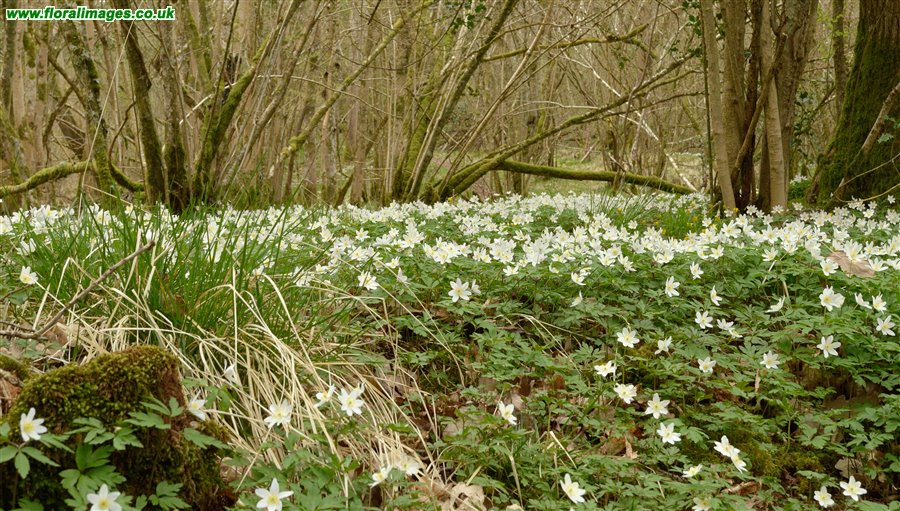
and contrasting carpets of Wood Anemone 


as well as Wild Garlic (not yet in flower).

Toothwort was so abundant to be considered a bit of a yawn by the end of our walk (well not really...)


So all in all it's a great place to be right at the moment. A word of warning though. Access to the other side of the Ennig is dependent on fordability of the river and not to be advised without suitable footwear in suitable weather conditions.

Earlier in the week I had to park up and investigate a population of Butterbur spotted near the Llanfaes A40 roundabout near Brecon. I thought I would like to see if there were any female plants (unlikely according to the books but an indicator of native status if found). You might think from this picture that I did (I certainly was encouraged at the site).


But no - I gather from reading several books that these will be "male" capitulae with sterile stigmas ! It's worth checking for plants, if you see this, with smaller flower heads and slender stigmas (at least that's implied by pictures I've seen in some books). But this isn't very likely here in south Wales. To cap it all Clapham Tutin and Warburg says that "only the sterile florets secrete nectar" - what is this plant trying to achieve ? (OK the answer is certainly the passing on of it's selfish genes - but in a subtle way no doubt.)

Lastly, I got this translation service from Twitter - Floralimages in Gangsta.

Thursday, April 11, 2013

Nant Irfon National Park

Disappointing not to find any Filmy Ferns - but then I only got to the first site. It was harder going underfoot than expected and ...

But the purpose of getting to know the area was served and some great scenery appreciated at the same time.

A promising looking site (to me) for Hymenophylum is the Nant Hir cascade - here viewed from the other side of the valley. And it looked to me that getting there from the north end of the reserve should be easier so a definite plan for later in the year to go that way.

Nant Hir feeding into the Irfon.

An impressive Downy Birch in the reserve

I also visited the only part of Hectad SN74 in Brecon VC:
Just the little promontory in from of where I was standing belongs to Brecon. The land across the Llyn Brianne Reservoir is in Cardiganshire.

Friday, March 29, 2013

Cornish Moneywort

28th March 2013
Paul Green was going to check the one Brecon Record for this (Sibthorpia europaea) so I joined him for the hunt. We both weren't expecting so much snow on the southern slopes of Mynydd Llangatwg near Brynmawr so at first the quest seemed doomed to fail.

But Paul's reputation for finding plants didn't let us down and he soon found a few leaves near the previously recorded site nestling under Juncus.


They were few and far between though here where a path crossed the Nant yr Hafod stream (although we had to admit there could be some under the quite large drifts of snow). 

Paul at about the third population found. 

We decided to follow the stream back down to the cars to see whether the plant had spread along it and this led us to areas of quite great abundance. 


Both of us were puzzled why this plant should occur in Breconshire on only this stream, in fact we were talking about this as we laboriously climbed over close parallel fences that the map showed crossing the moorland in an unusual way for common land fences. Paul had also told me earlier he met a man asking the way to the gasworks...

It turns out the fences mark the path of a gas pipeline and I passed the gasworks later returning round the mountain on the old tramway (now a road !) which is at the end of the pipeline. Could it be that pipeline worker's feet / tyres explain the Sibthorpia in this location ? 

Or is this an under-recorded plant for Brecon that also grows along similar streams ? (Or is the geology underylying this stream special ?)

By the end of the population - not far from the cars - I was spotting Sibthorpia like a pro...

Update after better "research" 1st April 20132

It can't be the gas pipeline that is responsible for Sibthorpia getting here - this was constructed between 2001 and 2004 (thanks Google Earth archive imagery !). The original record at this site was in 2000 . However there was a reservoir on the upper waters of the Nant yr Hafod constructed in the 1970s and now empty that might account for the plant being translocated by workers / their vehicles and of course there has been much construction work (tramroads etc) on the mountain since Victorian times.

Saturday, March 23, 2013

First proper meeting

But what a day ! Thanks to Vicky for joining me to look at the daffodils in Llandefaelog Wood and explore for other things we could jointly identify.

The daffodils would seem to be N. pseudonarcissus but maybe not as "pure" as those I posted last week. (Slightly flared / lobed corona on at least one of the few that were open enough to check.)

But writing down finds was becoming difficult by the time we departed (note to self - always take those fingerless mittens I bought in Bantry square a month ago). It was interesting to see so many regenerating conifers (Douglas Fir and ? obscure Abies) that must have come from parents outside the reserve. There was also a tall Larch with what we saw as largish cones very high up in our binoculars - so further investigation needed on that - maybe BWT know what it is.

I went to the "Captain's Walk" in Brecon next to look at a site where we (BWT volunteers) saw Butterbur leaves last year and lo and behold the flowers were just emerging:

Petasites hybridus, Brecon

It looks like my postponed plan for next Thursday at Abergwesyn might have to be put off again - the current long-range prediction is for 2 degrees during the day and -7 at night for that area - in other words an average below freezing !

Yesterday, on a historical heritage walk (tramways) I spotted a nice Helleborus foetidus (probably a garden escape in all honesty) in Glasbury. On the Brecon side of the Wye BUT VC 43 - Radnor - the old boundaries - aren't they wonderful ?

Helleborus foetidus, Glasbury

(Brecon hasn't had this recorded according to the current VC catalogue.)


Friday, March 15, 2013

Spring ?

Soon I think. In fact I felt a bit of a wimp for postponing the Abergwesyn foray planned for Thursday as I took up a long-standing offer of an introduction to Llangorse from an expert and we had a great day. It was still too early for much recording although plenty of signs of life and "places that looked potentially interesting.

 Selwyn, who took me, was a great guide and I now have met many of the landowners and know some good places to hunt for botanical interest. I did remove a layer in the midday sun but, as I had actually put on one more layer than I ever normally do I suppose I was right that Abergwesyn would have been pretty miserable... At the DoE hatchery I was shown some "probably wild" daffodils and they were - Narcissus pseudonarcissus I am sure (having checked with the very large Stace 3 key).


This hatchery is a little way away from the lake and is where Selwyn bred his voles. We saw plenty of signs of these around the lake though and I learnt that a Water Vole will always chop its reed stems (food storage) with a 45 degree cut...

A few days before that I spent some time at Betws-y-Coed on a BSBI Conifer identification course that really was excellent (And the explanation for some new confier pictures on the site.) I really feel I can cope with these now and actually a drive around the roads around Llangorse will yield some conifer records I notice.

Cones at the top of a Monkey Puzzle - a stretch for the lens I had with me but just visible

A new record for the old arboretum we were in - Araucaria araucana is regenerating there (Paul Green spotted it).

Friday, February 15, 2013

Another Reserve

My attempt to visit all Breconshire Reserves has been on hold but I went to Llandefaelog Wood yesterday. As with many of the reserves I have visited in autumn / sinter this was immediately one I put on my "must visit later in the year" list. (Quite soon judging from the Daffodils' state of growth.) The daffodils are billed as native so I will have a go at them before I consult the older records !

I'm always a sucker for Hazel "blossom" so took out the macro equipment for this:


Corylus avellana female flower

I spent most of my time though trying out my "trees in winter" skills after the excellent course in Shrewsbury a couple of weeks back. It certainly helped.


Friday, February 08, 2013

An Easy Flora

Not much to blog about this week (or last) although my trawl through the historical records for Breconshire continues. But my "grate frend*" John Clark had been travelling again and managed to photograph the entire vascular plant flora for a continent:
Colobanthus quitensis and Deschampsia antarctica on the Antarctic Peninsula 13th January 3013

See more pictures of them at the FloralImages recent additions page.

Apt that one is a monocot and the other an (eu-)dicot...

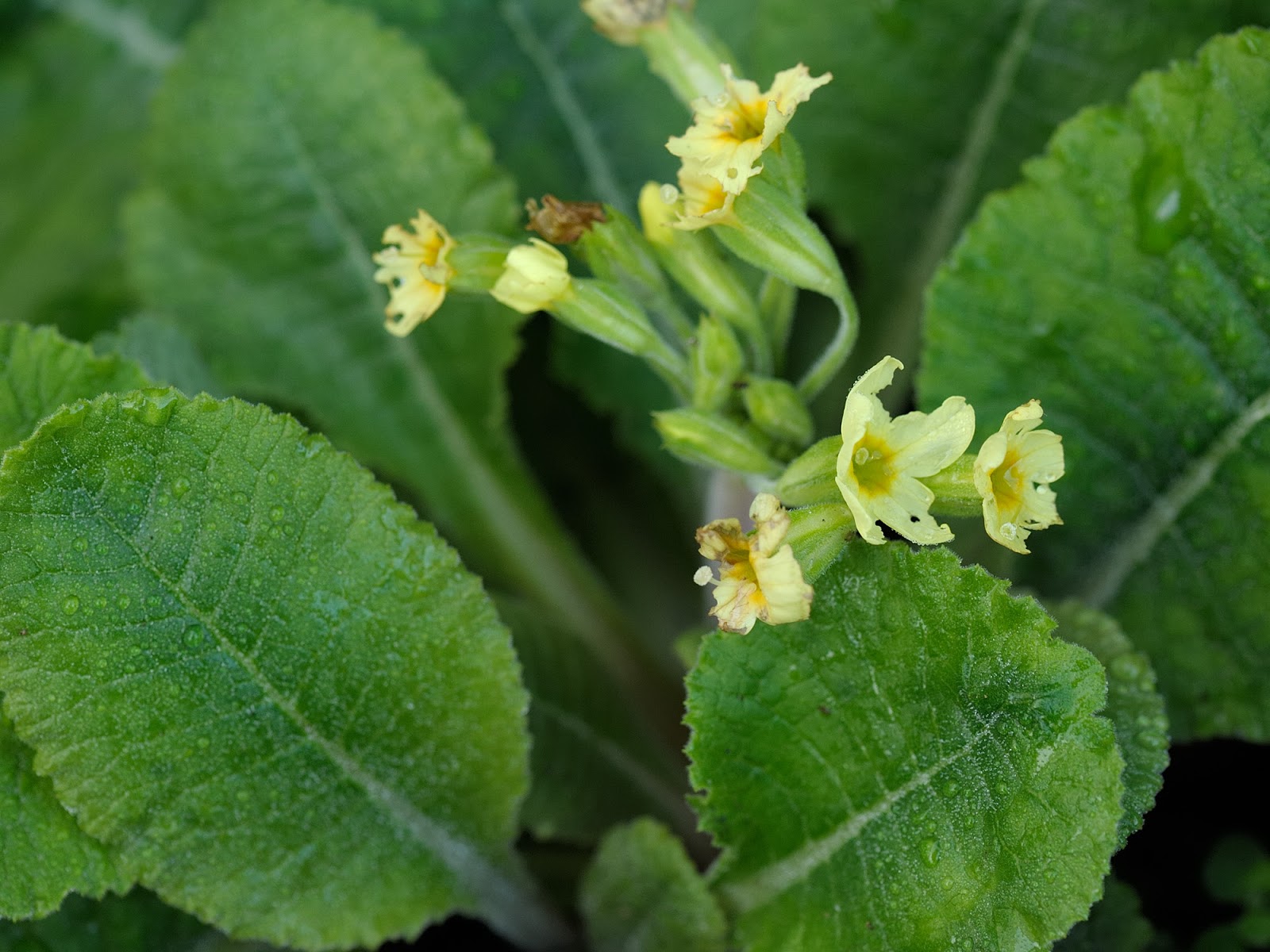
(And also I have some good guest images of Primula Elatior now - thanks to Ken Southall. See Primula Elatior at FloralImages.)

* Readers of Molesworth books will understand. Not sure which of us was Peason.

Friday, January 11, 2013

New Year, New Role

I've always felt my new role as joint recorder for Breconshire would become more "real" in the New Year (although I have been doing a lot of preparation and some recording in the late autumn / winter of 2012). Even the weather seems to be more promising - although ice is forecast for the weekend. (That will teach the various spring plants in my garden a thing or two - many are being very precocious including some just-emerging Oxlip flowers on one of the plants I grew last year.)
Primula elatior, my garden, from seed, struggling this early ...
This week Paul Green (Welsh Officer standing in for Polly) called to reassure me on the role (at least that is how it seemed to me). I had known of Paul and even got help from him and his brother over the web for a long time but we only met for the first time a few months ago. Of course his (and others') Flora of Somerset was a huge help to me starting out late in life to be some sort of botanist based in Weston-super-Mare.
We went up to Henallt Common to see the Blysmus compressus site (only site in Wales ???) and there were discernible last year specimens to see. But we were both delighted to find, visiting the main Circaea x intermedia site (no sign at all as expected) that there was a Colchicum autumnale plant still flowering on the slope. Rather pitiful in the conditions but full marks for sustained effort.
Colchicum autumnale flowering in January at Henallt
This common above Hay is an abundant Colchicum site and it was good to see the evidence of serious Bracken control (thanks CCW) on an open grass slope that I am sure can be seen from our upstairs windows here in Hay. I am hoping one to day to see this pink with Colchicum flowers (not swamped by Bracken) from here.
Paul noted the "flora of De Breos Court" - where we live in Hay. The small paving stones make a good site for one or two interesting plants including a garden escape I was struggling to identify and he was able to name as Malling Toadflax, Chaenorhinum origanifolium. To my shame I later realised that David Fenwick had shown me this near Plymouth a while back.
Malling Toadflax, Chaenorhinum origanifolium
Blysmus compressus at Henallt - in the summer

Saturday, December 15, 2012

The Wye at Builth

Just west of Builth Wells the Wye passes through the rather picturesque Pen-ddol Rocks which my Geological Map suggests are glacial deposits (?) - but there are Dolerite formations nearby (in Radnorshire).


It's a popular fishing location apparently and certainly worth exploration botanically in the spring. I did note a Red Oak among the plantations of Larch nearby (leaves I know only too well from clearing my father's garden of them in Oxford).

Friday, December 07, 2012

... and more...

My first sighting of this little alien was on a "quick walk up Pen y Fan":
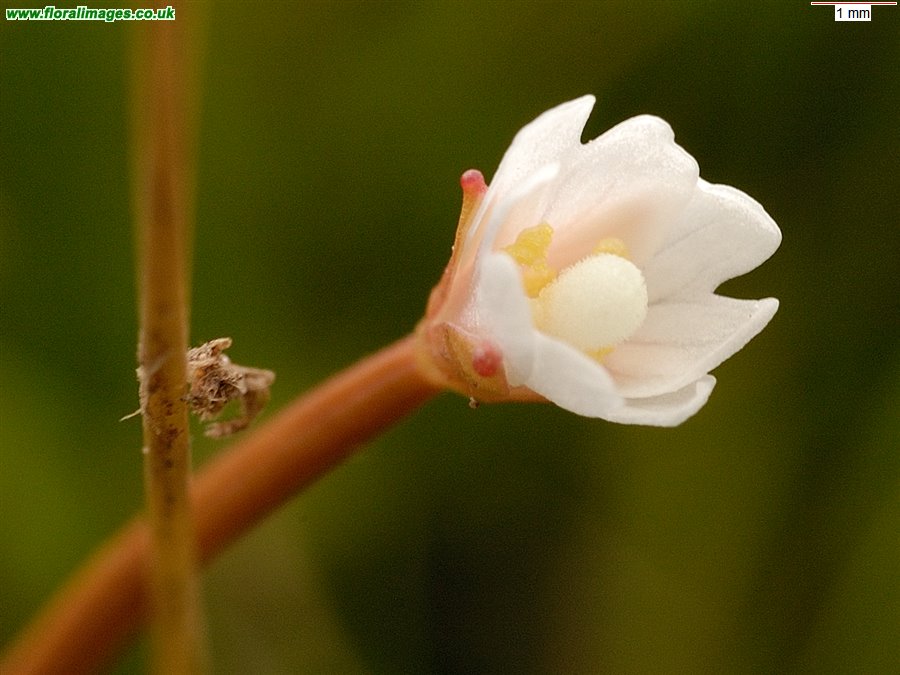
New Zealand Willowherb
Epilobium brunnescens
Probably spread by walkers' boots I suspect.

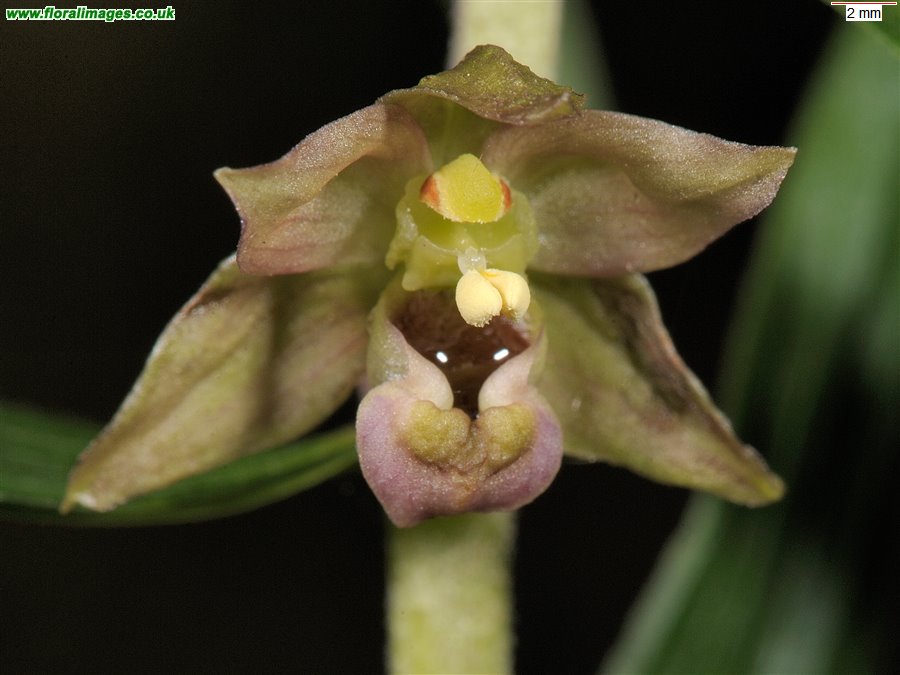
And this isn't that uncommon but a recording scramble at Craig y Rhiwarth this year provided the perfect opportunity for a photograph that shows all (?) the Orchid flower "bits".
Broad-leaved Helleborine
Epipactis helleborine

And the local speciality - visible from our window in theory - if you had a good enough telescope...
Meadow Saffron
or Naked ladies
Colchicum autumnale