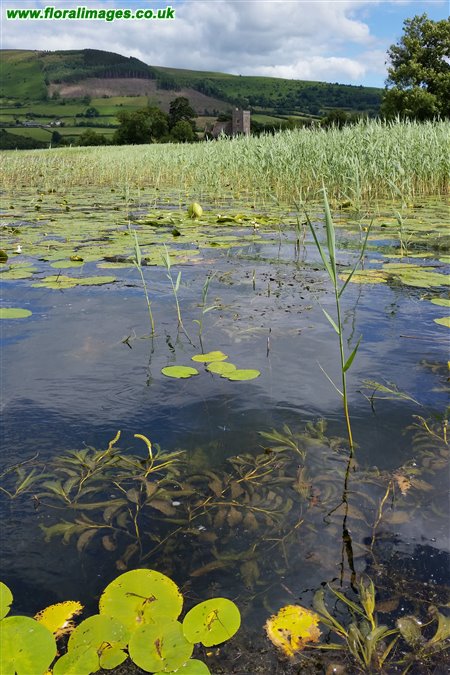
Pages

Saturday, July 30, 2016

BSBI Welsh AGM at Brecon

The Welsh section of the Botanical Society of Britain and Ireland holds an AGM Field meeting every year somewhere in Wales and this year was the first occasion for some time that the Brecknock area was host. (The formal business is soon dealt with and most of the meeting is about botanists getting together, field meetings and food.)

 I'll start with a couple of the pictures I took while out with members of the botany group checking the routes of the proposed field visits.

Llangorse was a natural choice for a field visit - it has a large proportion of our rarer species growing in and around it and always has surprises in store for a visiting botanist.

Joan and I were surprised to see a lot of Veronica catenata all around the periphery of the lake. It's normally found there somewhere but not usually in great abundance or, for that matter, particularity large plants. This year was different.
Pink Water-Speedwell, Graeanllys-y-dwr rhosliw or Veronica catenata
Here showing swollen fruits (galls) caused by Gymnetron villosulum beetle larvae.

We also saw Celery-leaved Buttercup
Celery-leaved Buttercup, Crafanc yr eryr or Ranunculus sceleratus

The meeting proper started on the Tuesday afternoon but some arrived early and explored the area around the Ogof Ffynnon Ddu National Nature Reserve high up above Craig y Nos and Penwyllt where the limestone pavement supports some rare communities of plants. They first found Green Spleenwort there:

and later found it was a relatively common plant in the limestone.

Green Spleenwort, Duegredynen werdd or Asplenium viride

Here Martyn is pointing out a Lily of the Valley plant deep in a limestone "gryke". This is just one of the rather unexpected species to be found in the area.

Lily-of-the-valley, Lili'r dyffrynnoedd or Convallaria majalis

Meanwhile several of the visitors were setting up their exhibits at The Barn at Brynich - our venue for the meeting.


Andy Shaw in particular had an impressive display of the many rare plants he has in cultivation.

With this tray having some particularly difficult to find in the wild specimens:

Perhaps the star being this fern found only at a few South Western coastal sites.
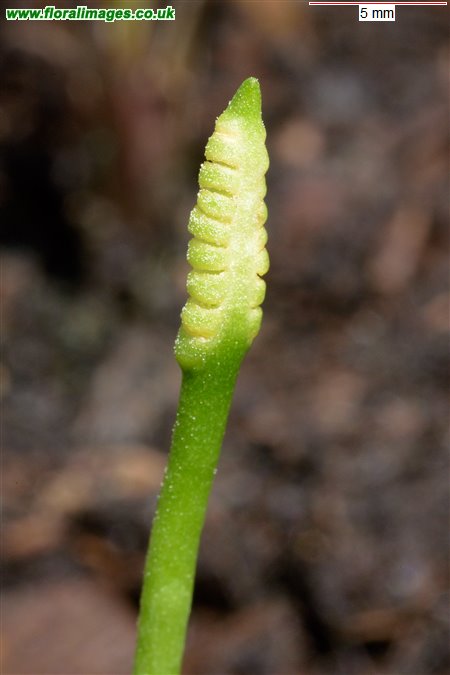
Small Adder's-tongue, Tafod-y-neidr bach or Ophioglossum azoricum

The next day (after the formalities of the AGM in the early morning) groups set out to explore Vicarage Meadows, Cwm Cadlan and Stanner Rocks.

Here are some pictures of the group at Vicarage Meadows.


Walking through the abundant Dyer's Greenweed

Dyer's Greenweed, Melynog y waun or Genista tinctoria

(The group who went to Ogof Ffynnon Ddu National Nature Reserve saw this much more rare close relative on the Tuesday)
Hairy Greenweed, Corfanhadlen flewog or Genista pilosa

(I don't have pictures of the Cwm cadlan and Stanner vists but plenty was seen at both.)

On the Thursday most of the delegates went to Llangorse (the few exceptions mentioned below...)

And some of those went out on boats to sample the plants growing in the water.

The "professional boat"

The "amateur" boat (including myself taking the picture).

We saw:
Ivy-leaved Duckweed, Llinad dail eiddew or Lemna trisulca
and
Yellow Water-lily, Lili'r-dwr felen or Nuphar lutea
with, in the background:
Fringed Water-lily, Lili’r-dŵr eddïog or Nymphoides peltata
(The White water lily was also seen.)

But some serious work was done, finding two Charophytes and a variety of the leafy pond-weeds.

Shining Pondweed, Dyfrllys disglair or Potamogeton lucens

And we had a distant view of the other small party up on Cribyn and Pen y Fan seeing the Attenborough's Hawkweed and other gems on  the steep cliffs. (They are not quite visible in the picture below...)

(Taken from the boat when the party would have been on Cribyn - they had perfect weather as we did.)
Ray Woods came along later to join the land party at Llangorse but didn't catch up with them. He did however re-find this which had not been recorded since the 1990s.
Mare's-tail, Rhawn y gaseg or Hippuris vulgaris

Over the four days 1150 records for the county were made by BSBI botanists - a welcome contribution to our recording effort especially as the list included species we local recorders had missed. Amongst these records are 35 updated since before 2000 and 11 that had not been seen before in the area*.

Many thanks to the photographers who contributed many of the pictures above.
-----------------------------------------------------------------------------------------------------------------------
*Hectad or 10km square

Sunday, June 19, 2016

A quick catch up

It's not that we haven't been botanising - but I have not found time to post since the weather came good! Here is a brief summary of recent Brecknock Botany:

We've been finding plenty of this this year. As with most annuals there is a variation in abundance from year to year and this seems to be a good one:
Changing Forget-me-not, Sgorpionllys amryliw or Myosotis discolor

Seen on a farm above Hay and on the Epynt among other places.

And what seems to be a new record for the 10km square on Epynt was this little easily-overlooked gem:
Slender Trefoil, Meillionen hopysaidd eiddil or Trifolium micranthum

I saw this in a hedgerow near Sarnau:
Sherard's Downy-rose, Rhosyn Sherard or Rosa sherardii

And we were taken by the showy capsules of Marsh Marigold on the farm aboive Hay:
Marsh-marigold, Gold y gors or Caltha palustris - fruits both opened and closed

Some pictures from Sue's camera from the meadows near Hay:


------------------------------------------------------------------------------------------------------------------
And finally - nothing to do with Brecknock wild plants - I sowed seed of this South African plant over 10 years ago and it has finally flowered:
Angel's Fishing Rod in this case Dierama luteoalbidum (Family: Iridaceae)

I like Angel's Fishing Rods but wanted a non-purple species - this is it - allegedly rather frost tender for this country, but it survived an unheated greenhouse in Hay over the last eight years (outside in the summer).

Saturday, May 28, 2016

Lanes around Hay

Last week we walked paths south of Hay that I haven't been on before, that took us past some old meadows and some rather more "improved" land. There was plenty to see, only some of which we photographed.

White Bryony was making it's way up the hedges rapidly aided by its spring-like tendrils.
White Bryony, Bloneg y ddaear or Bryonia dioica

We saw some later in an obviously very severely cut down hedge that was reaching into the air looking for former high supports - together with similarly expectant Honeysuckle.

Near Hay was a lovely field (mainly) of the third most common of our buttercups, easily recognised when you know how by the turned back sepals:
Bulbous Buttercup, Blodyn-ymenyn bondew or Ranunculus bulbosus

Quite near Hay we found a little population of Early Dog-violet on the slope above the Dulas Brook - flowering rather late I think in this delayed 2016 spring.
Early Dog-violet, or Viola reichenbachiana
(Photographed in April at Craig y Cilau)

Higher up we found Changing Forget-me-not among the rich collection of species in the meadows.
Changing Forget-me-not, Sgorpionllys amryliw or Myosotis discolor
(This picture also not from last week)

And later on this non-native but charming Speedwell.
Slender Speedwell, or Veronica filiformis

Sue took this as I was recording Wood Melick in a lane:
Wood Melick, Meligwellt y coed or Melica uniflora
-----------------------------------------------------------------------------------------------------------
Earlier in the week at Pwyll y Wrach I took this picture:
Bog Stitchwort, Serenllys y gors or Stellaria alsine. Was known as Stellaria uliginosa

Sunday, May 22, 2016

Llangynidr Mountain

Steph took us up Llangynidr mountain to seek out ponds / lakes on Thursday and we recorded the vegetation we could along the way.


Llyn y Garn-fawr is not as large as depicted on the map - maybe because it now drains into a peaty sinkhole and not into the stream marked on the map. (The stream still exists as it gets fed by water from the area around it.)
But Steph had a rummage around for invertebrates


Common Cottongrass, Plu’r gweunydd or Eriophorum angustifolium was abundant as was its smaller relative, Hare's-tail Cotton-grass

We also visited the Chartist Cave which actually yielded many of the records we made - with several species of fern in the cave and a variety of other plants nearby in the collapsed limestone boulders.


Maidenhair Spleenwort, Duegredynen gwallt y forwyn or Asplenium trichomanes subsp. quadrivalens

Common Sedge, Hesgen gyffredin or Carex nigra

--------------------------------------------------------------------------------------------------------
Last week I was in West Cork for the Bay run from Glengarriff to Bantry - as a spectator I might add. There was plenty to see botanically - they've had a slightly warmer spring than us. And on a favourite beach we saw a lot of this:

Oyster Thief, Colpomenia peregrina

I was able to find it on David Fenwick's excellent site Aphotomarine. See also his flora at Aphotoflora.

This is an interesting seaweed - Wikipedia has the following information:

"Colpomenia peregrina, sometimes referred to by its vernacular names Oyster Thief and Bladder Weed, is a brown seaweed not native to the British Isles, but recorded in Ireland since 1934. It appears to have been introduced from the Pacific and was first noticed in Europe in 1906 on oyster beds."

--------------------------------------------------------------------------------------------------------
Before that I was at Porth yr Ogof and saw this:

False Puffball, Enteridium lycoperdon also called Reticularia lycoperdon

It's a slime mould fruiting body it seems - like a loose bag of goo to feel! On a Hazel trunk. Thanks to Lorraine who found out what it was.