Pages

Sunday, May 10, 2015

A busy week

The Digedi valley was my first outing last week - to take a group on the old route up towards Gospel Pass to see some of the remains of the days when it was "a busy highway" with a plant nursery and a school as well as to see some of the varied flora along the route. 

In the event it was too early for the Meadow Saxifrage and the Bladdernut that has presumably been there since the days of the nursery was cut down to the ground in clearing operations around the ford. There were signs of regeneration though. 
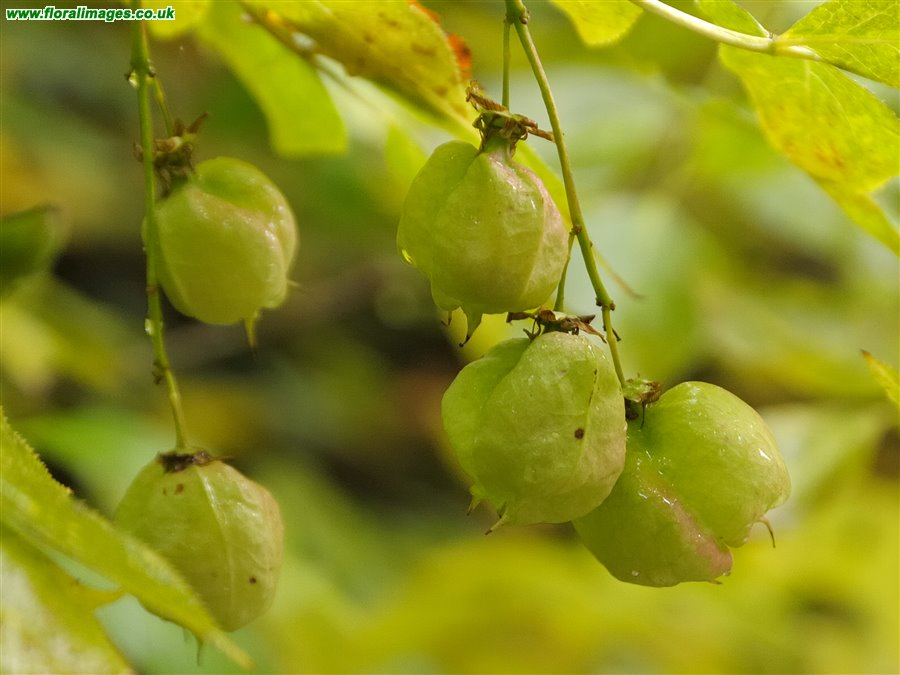
Bladdernut (fruits), Cneuen godog or Staphylea pinnata in 2012

At Penyrwrlod Serth (a deserted farmstead) we had a view of the daffodils being cultivated high in the Black Mountains. Presumably part of the ongoing trial for production of galantamine. Higher yields come from growing the bulbs in the more stressful (for the plants) conditions here.

Then I set out to chase up one or two things I wanted to see like this Solomon's Seal growing by the hedge outside Trefecca:
Garden Solomon's-seal, Llysiau-Solomon yr ardd or Polygonatum x hybridum 

and then further west in the county to see this flowering:
Soft-leaved Sedge, Hesgen feddal or Carex montana

Soft-leaved Sedge isn't found in many parts of the the British Isles but we have good populations in Brecknock.

In Cae Bryntywarch Nature Reserve Lousewort was dotted everywhere.
Lousewort, Melog y cwn or Pedicularis sylvatica

Then I joined a Royal Commission on the Ancient and Historical Monuments of Wales walk right on our borders - we walked out in Brecknock, went round the source of the Usk and returned through Carmarthenshire. It's wild country and I made some records of the more obvious species seen but it was mainly about stone circles, sheepfolds and other relics of the past.
The young Usk

A deserted stone sheepfold

Lichen encrusted rock - part of an alignment
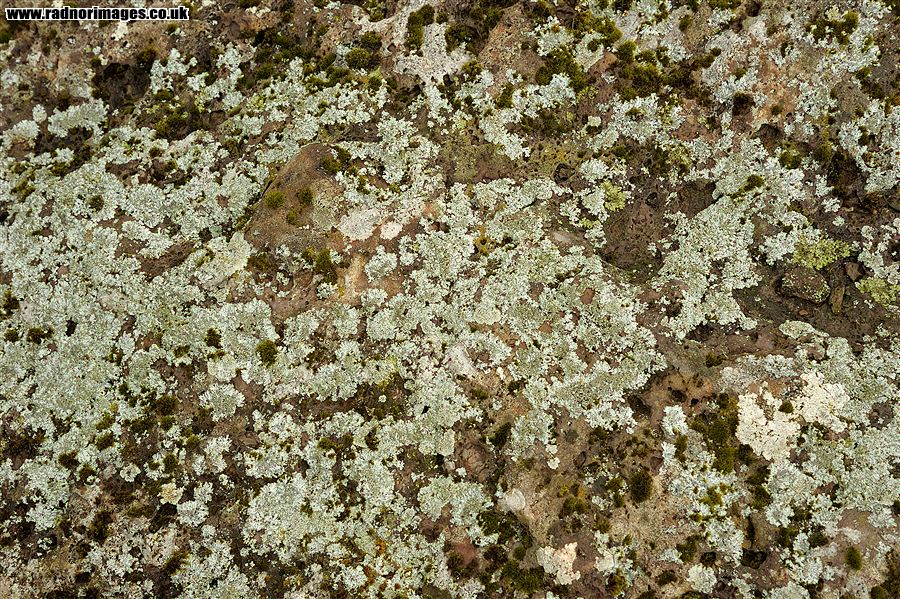
Close up

And little streams like this to go back and explore more...

Monday, May 04, 2015

Talgarth Walking Festival

Having agreed to lead a walk up from Talgarth to Trewalkin Meadow Nature Reserve for the festival we set out to do some route checking (and plant recording) earlier in the week.

On the old railway line near Talgarth (private land with special access permission for the Festival) we found a large patch of Goldilocks Buttercup, an annual with a distinctive stance and, usually, rather imperfect flowers with missing petals. These however were mostly well-formed - clearly a superior Brecknockshire form!
Goldilocks Buttercup, Blodyn-ymenyn peneuraid or Ranunculus auricomus

There was plenty of native Yellow Archangel and also some of this garden form in the area:
Yellow Archangel (Garden form), Marddanhadlen felen or Lamiastrum galeobdolon subsp. argentatum
The main difference of this form is the leaves with silvery-white blotches.

When exploring the railway line some of us took the old Tramway route, others the old railway and the two intrepid members of the group the high ground in between at this point:

Up at the reserve on the day of the walk it was early for many things like Greater Burnet (although we found one plant starting to send up flowering spikes). But Water Avens (and its hybrid with Wood Avens) was already abundant - and reminded us that we were lucky to be able to get around so easily and even picnic in what is normally a very wet place.
Water Avens, Mapgoll glan y dwr or Geum rivale

In the wooded area there was Wood Spurge as well as a ground carpet of Sanicle, Opposite-leaved Golden-saxifrage and more. There was even one just-starting-to-flower Early Purple Orchid, spotted by Bev from the Wildlife Trust.
Wood Spurge, Llaethlys y coed or Euphorbia amygdaloides

Picnicking in Trewalkin meadow isn't always this easy!

Sunday, April 26, 2015

Not Brecknock

... Apart from the view from the A40 on the way to Fishguard and then Ireland.

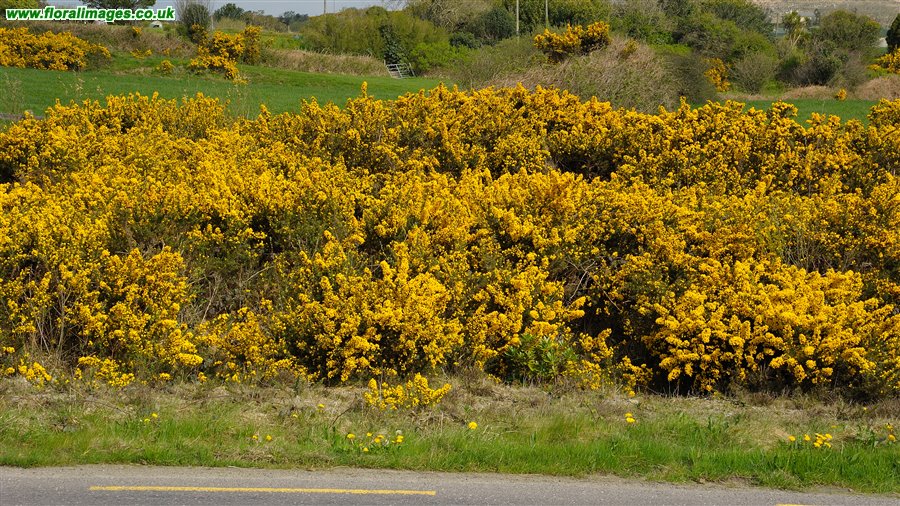
Noticeable all the way was the abundance of flowering that has been unleashed in the dry and warm spell over the last two weeks. Primroses forming bright domes of yellow with the plant quite hidden along the roadsides were one of the highlights particularly in Pembrokeshire and then in Ireland we were stunned by the displays of Common Gorse. The latter I did manage to photograph:

Gorse, Eithinen Ffrengig or Ulex europaeus near Bantry, West Cork

And then after climbing Knockboy - the highest mountain in County Cork (no great boast really) I was delighted to see a large patch of Crowfoot on the way down:

Round-leaved Crowfoot, Crafanc-y-frân y rhostir or Ranunculus omiophyllus
(I've no idea what the Irish for this is)

Some views from Knockboy:
The mountains of Kerry in the distance

You can still just see where these Kerry fields once went right to the top - when Ireland had the highest population density in Europe
Lough Boy - below Knockboy

Now today in a short excursion into Herefordshire (walking from home in Hay) I was met by hedgerow displays of Greater Stitchwort and Yellow Archangel - so spring has sprung and Brecknock is waiting to be explored...

And finally some more of that Gorse:

Saturday, April 04, 2015

Butterbur again

Paul Green spotted the Giant Butterbur patch near the car park in Builth Wells last week. See his pictures on his blog. Meanwhile I spotted a patch of the same species in Cwmdu - which I had been told about by one of my recording group last year. This was on the way to Abergavenny. On the way back we stopped for coffee at the Cafe - highly recommended to all those who, like us, have passed many times and not stopped. (Mynydd Ddu Tea Rooms) So here are some pictures of this Butterbur site.
Giant Butterbur or Yr alan mwyaf, Petasites japonicus on the verge in Cwmdu
Not a typical habitat for this species and there was none on the other side of the hedge that I could see - so maybe off a lorry tyre ?

Saturday, March 28, 2015

Daffodil day

We set out last week to check some of Brecknockshire's known sites for Narcissus pseudonarcissus, the native Daffodil. This is something I haven't done much yet - spending a day on one genus.

Not many yet flowering at Cilmery

Of course it is difficult to say in any particular case whether a population is actually natively growing where it is and the preponderance of churchyards in the known sites can be seen two ways - maybe as sites that preserve the ancient flora of the area or maybe places where people have brought Daffodils in from the local woods in the past. Certainly nowadays garden centres and gardens have become a source for churchyard plantings as we saw only too clearly.
 Getting the close-up

But the populations of Narcissus pseudonarcissus were still there (and we found some new ones to record as well). Some have obvious significant variation with not all plants conforming to the keys and other are much more uniform. Again it is difficult to be sure why this is but certainly some locations seemed to have Daffodils such as N. macrolobus, Pale-flowered Daffodil which is similar to the native species and others had variation between the two.
Pale-flowered Daffodil or Narcissus macrolobus at Llanfilo

We also saw many clumps of clear garden origin, most of which we didn't try to identify but several species of the less-selected types turned up repeatedly such as a double form of N. pseudonarcissus as well as N. x monochromus, Reflexed Daffodil (probably a variety known as "February Gold") and Narcissus hispanicus, Spanish Daffodil.

Llandewi'r Cwm Church with Daffodils

Certainly a day of immersion in Daffodils and the Stace Key led to us having a better feel for the genus and what to look out for. We need more Daffodil spotters in Brecknock as I feel the number of sites with reasonably authentic N. pseudonarcissus is probably under-counted. We found it for instance at the small Ebenezer Chapel near Upper Chapel on the Epynt where I don't think is has been recorded before. It was also confirmed (and abundant including the area around) at Cilmery (the Church of St Cannen, Llanganten).

Daffodils at Ebenezer Chapel

Look out for smallish Daffodils (not the tiny Tete a Tete though) growing more individually (ie less clumped) with a long nearly parallel-sided corona that is darker than the petals (tepals to the purists). The true native plant holds its flower at best slightly above horizontally - and often drooping.
Daffodi, Cenhinen-Bedr wyllt or Narcissus pseudonarcissus at Llandewi'r Cwm Churchyard
and high above a lane very near Brecon.
A rather small remnant (?) population at Llanfilo under the Yew.

Saturday, March 21, 2015

We climbed all over Craig y Rhiwarth and all we got was this *** Celandine

Well not quite - and it is a delightful Celandine:

Lesser Celandine or Llygad Ebrill, Ficaria verna (Was previously known as Ranunculus ficaria)

We were hoping to find Wood Spurge or Llaethlys y coed, Euphorbia amygdaloides which was last seen at this reserve in the 1980s but didn't find any. That doesn't prove it isn't there though and maybe we were a little early (but it is well developed in gardens now). This Brecknock Wildlife Trust Reserve is steep with lots of scree and boulders that are easily dislodged to imperil anyone below, so if you are thinking of having a look then do take care...

It was a lovely day though and we saw a lot else just beginning to grow but only the one Celandine was flowering on the sloes that we came across - there are many on the roadside verges now.

And we saw Whitlowgrass or Llysiau’r-bystwn, Erophila where we parked in Brecon to share cars which may just be Erophila glabrescens, Glabrous Whitlowgrass or Llysiau’r-bystwn llyfn - watch this space.

Thursday, March 12, 2015

Green Hellebore

A group of us were exploring a site thought to have once been a monastery near Llangors today. It's also a site for Green Hellebore which grows in four known sites in the county. There may be more as it seems to do well where it does grow. Whether there is any connection with the site history we don't know.
Green Hellebore, Crafanc-yr-arth werdd or Helleborus viridis

Saturday, January 03, 2015

A good start to the New Year

... If a little cold and wet.

Seven of us set out on Saturday 3rd January to take part in the BSBI New Year Plant Hunt 2015. This is the fourth year of this event - the brainchild of Tim Rich and Dr Sarah Whild, Chair of BSBI's Training and Education Committee and this is the first year that the Brecknock Recording Group has joined in.


We didn't break any records for the number of plants found but think we did relatively well to find 18 19 different plants* flowering around Builth Wells. Of course we also saw many we recognised but could not find any flowers - including lots of Whitlow Grass which would be flowering like a shot given a fair bit of weather.

Two of these non-flowering species were quite significant - Hypericum humifusum, Trailing St John's-wort near the Bowling Green and Parietaria judaica, Pellitory-of-the-wall by a wall opposite the Bull in the picture. The latter may be a new record for the area we think and both of these were found by Andy.

The hunt rules: 
1. Pick one day over the New Year weekend between Thursday 1st and Sunday 4th January 2015, when the weather is decent enough to record in.
2. Record wild and naturalised plants (but not planted or garden species) in flower. Please check plants are actually flowering – that catkins are actually open, grasses have open florets, stigmas or anthers are on show etc.
3. Record for up to 3 hours.

We recorded for about 2 and a half hours - by which time, cars and flasks were calling.

* Hazel reminded me that she found a flowering Black Medick...

Friday, November 21, 2014

"f8 and be there"

It seems this wasn't a saying of Ansel Adams' at all, as I thought, but rather one of those quotes everybody (in this case every photographer) knows but no one can agree who first said it.

It applied to the few photographs I took on a misty day last week exploring around and up on Gilwern Hill in preparation for a proper botanical meeting next summer.

So the fact that all but the last photo were taken at a manual setting (as I last left the camera) was offset by the fact it happened to be f8.

Nikon software was able to extract an optimised image luckily and they are below. So for non-photographers I will shut up technically - after remarking that is was always the "be there" bit of the quote that mattered.

Where we were was Gilwern Hill - which none of us really knew and thought we ought to get to know before a planned BSBI meeting next year. "We" were myself and two of my recording group and the two Monmouthshire recorders - the meeting is to be a joint one and the border between our Vice-counties goes straight across the top of the hill.

So here are some pictures of the wonderful fungi we saw:

A Hygrocybe - bit which one?

Yellow Brain Fungus or Tremella mesenterica

Parrot Waxcap or Hygrocybe psittacina

The botany can wait for next June - but we did see a lot of this:
Black Spleenwort or Duegredynen goesddu, Asplenium adiantum-nigrum

Which I think bodes well for next year's outing.

Addendum
It seems no one can even agree on what type of photography the quotation refers to - I always thought landscape photography - where definition is paramount and f8 has always been and is likely to remain the optimum setting for most lenses on that criterion. So, assuming a tripod, the only other requirement is to "be there" when the light is just right and give the right exposure at f8. But others say it's about news photographers in the flashbulb era - and of course "being there" is vital for news reporting as well.

Monday, October 27, 2014

Trewalkin

Three of us set out from Talgarth last week to try out a walk for the Walking Festival next May.

The aim is a circular walk along the railway line (as was) to Trefecca, up the hill to the reserve and back via the paths direct to Talgarth. We used the lanes to get to Trefecca as permission to go on the railway line isn't yet sorted.

On the way we found a damp meadow with many little "potato-like" plants that turned out to be Black Nightshade that was recovering from being mown. (There were several other interesting species there as well.)
Black Nightshade or Codwarth du, Solanum nigrum

Then we passed a wayside Aster making quite a show:
Narrow-leaved Michaelmas-daisy or Blodyn-Mihangel culddail, Aster lanceolatus (probably...)

And so we made our way up the field paths, past a Long Cairn (Penyrwrlodd Long Cairn thought to be about 4000BC). and onto a hollow lane that led us to the reserve.

Trewalkin meadow - not at its most photogenic time but should be a good show in May for the Walking Festival

We were able to make quite a few records in the woodland though and found the Wood spurge I had previously missed there:
Wood Spurge or Llaethlys y coed, Euphorbia amygdaloides

There was also a big patch of Cow-wheat and many many Sanicle leaves around the woodland.

Sue even found the remains of the Wood spurge inflorescence...
The route back took us onto the old A479 down to Talgarth past Talgarth Camp / Hillfort - there should be some great views in May.

Thursday, October 09, 2014

Ireland - Update

Here is the updated blog from Ireland with better pictures:

Botany was not really my priority for a while as we enjoyed excellent weather in Bantry Bay.
A quick stop on the way over at the old Chetwynd viaduct near Cork that last carried a train in 1950s. There's a cafe...

Bere Island - once a defence station for the UK and still inhabited
A shopping trolley joins three cars (one mine) on the ferry
Goats and...
a British gun still in place
Rocks covered in lichen and Sea-spurrey / Thrift
Hungry Hill from Bere Island briefly free of cloud at the top. I mean to climb this one day - when conditions are completely clear as the risk of cloud when you get to the top is very high.
Gateposts that have lost their way
Golden Rod - still a delight in the lanes

I saw lots of botany but little in get-the-camera-out state as it is so dry. It took me a while to recognise dessicated Purple Loose-strife - everywhere in ground that must normally be wet but isn't now.

At the heritage centre I saw and purchased a new book - "The Wild Plants of Bere, Dursey, Whiddy and other islands in Bantry Bay" which will be a great stimulus for further exploration here. Pleased to see that I had spotted many of the featured species for Bere - even if dessicated and past flowering.
Plantago coronopus - Buck's Horn Plantain rosette
Golden Rod and Devil's Bit Scabious in the lanes
There were five cars / vans going back - just possible and hemming me in my drivers seat as "the one in middle". You reverse onto this ferry - which is just something you pick up from observation !

Later we got to Whiddy Island just near Bantry where I chased up a site from the book - Asplenium onopteris - Irish Spleenwort which is rare in Ireland and "one of 16" species that occur in Ireland and not Great Britain. There is some doubt about the true identity of this population and my photographs don't provide definitive evidence. There were some plants of Black Spleenwort (which we do have) nearby.